
All articles
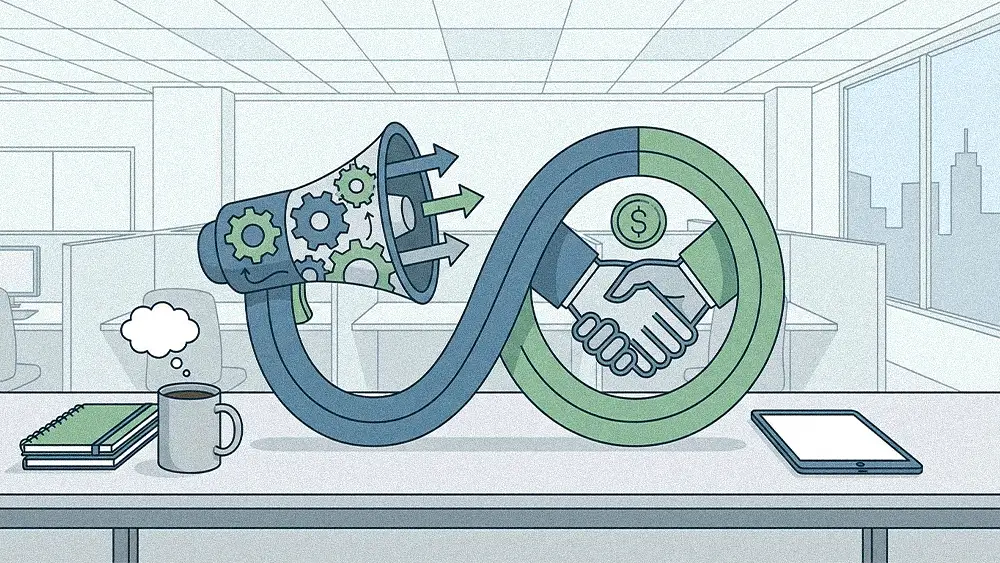
Marketing Earns Its Revenue Mandate When Leaders Grant The Authority To Match
Taylour Scanlin, Marketing Manager at Miracle, shares why marketing teams handed a revenue number need access to the pricing, product, and service decisions that shape it.

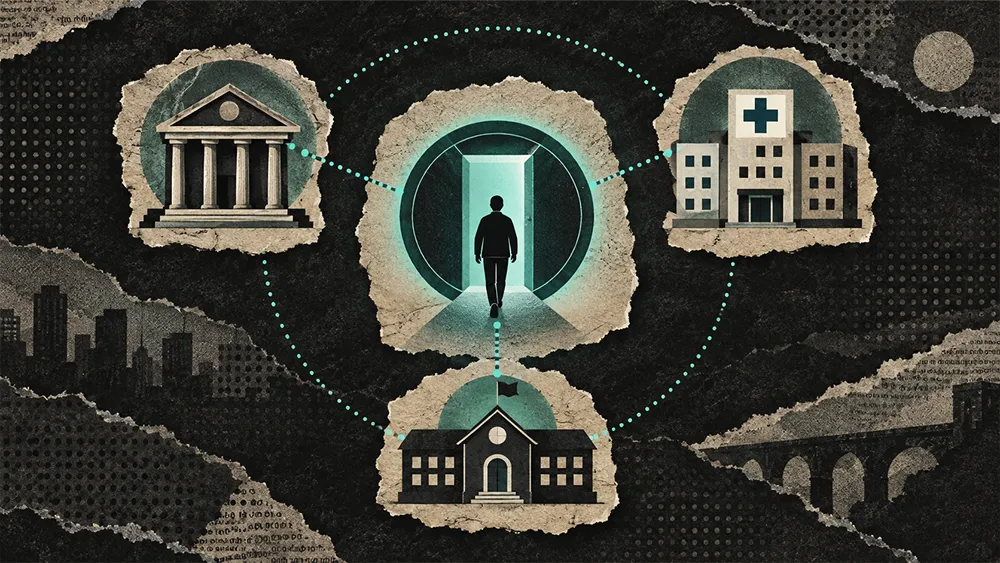
If organizations want marketers to think like CEOs, they need to empower them with more cross-functional influence and a seat at the table.

Marketing teams are carrying more revenue accountability than at any point in the last decade, and the resources attached to that responsibility haven't moved with it. Marketing headcount growth has dropped by half over the past year, and training budgets have declined to 3.8% of marketing spend. Revenue leaders keep adding pipeline goals, AI adoption mandates, and new reporting lines to the marketing function without widening the authority that would let marketers act on any of them.
Taylour Scanlin is the Marketing Manager at Miracle, a boutique M&A and investment advisory firm that works on commercial real estate deals in the car wash industry. Her work there covers go-to-market and digital strategy, and she standardizes the marketing collateral and confidential information memorandums that deal teams use to move sell-side transactions. Healthcare marketing accounted for most of her career before Miracle, and she has taught advertising, brand promotion, and business-to-business marketing as an adjunct professor. Teaching the discipline while practicing it has given her a long view on how companies define the marketing role, and on the distance between that definition and the results the function is asked to produce.
"If organizations want marketers to think like CEOs, they need to empower them with more cross-functional influence and a seat at the table," says Scanlin. Companies have moved revenue accountability onto the marketing org chart well ahead of the access that would make it workable. Marketing leaders often inherit targets set in meetings they didn't attend, then learn about the pricing change or service policy shaping those targets once customers have already encountered it.
Marketing absorbs the blame
Scanlin has watched the same sequence play out across her career and hears the same thing from marketing peers across industries. Revenue softens, leadership calls a meeting, and campaign performance lands at the top of the agenda. Marketing reports its numbers more often and in more detail than most other functions, which makes those numbers the easiest to question and the quickest to blame. "Marketing is often the most visible function when growth starts to slow down, even though growth depends on many interconnected parts of the business," Scanlin notes.
A campaign moves people toward a product, and everything those people encounter afterward belongs to teams marketing doesn't run. Scanlin is direct about where her own accountability should end, and about how easily leadership collapses weak demand and weak delivery into a single failure. "Marketing amplifies what's already true about a business," she explains. "If there's a break in the customer experience, marketing can't fix that by itself."
When a company tightens spending, the marketing line gets reviewed on a faster timetable than headcount elsewhere in the business, and Scanlin has been through enough cycles to expect it. Marketers across her network describe the same treatment in the same terms, and seeing how many of them share the experience has been its own small relief. "During economic uncertainty, marketing budgets are usually slashed or at least scrutinized, and then the expectation is still there to perform," she says. "It just seems a bit unfair."
Under the AI mandate
Artificial intelligence has raised the output expectations attached to that same reduced budget. Leadership teams see what generative tools produce in a demonstration and set targets to match, without accounting for the work that determines whether the output is worth producing. Scanlin describes a job that keeps taking on new requirements without giving up any of the old ones. "The modern marketer isn't just expected to market anymore," she shares. "Now we're expected to drive revenue and understand AI."
Scanlin uses the technology daily and supports responsible adoption of it across her own work, which is what makes her impatient with the way executives talk about timelines. Leaders who expect a campaign to produce results immediately, and to go viral while doing it, are describing an outcome that depends on months of positioning and a measure of luck. "It's that unrealistic expectation of leadership being like, 'Oh well, you can have AI do it,'" says Scanlin. "That's not a strategy. The strategy needs to be there."
Scanlin runs her own work in a fixed order, building segmentation and targeting with the people available to her before asking the tool what the group failed to consider. For a one-person team with nobody to trade ideas with, that exchange supplies a perspective the job structure doesn't provide. "A lot of times I prefer to use the human approach first," says Scanlin. "We're really valuable. Our expertise is valuable. Start there first and then run it through AI."
Town halls and check-ins
Scanlin treats marketing's exclusion from the decisions it answers for as a communication failure. Regular leadership meetings, town halls, and manager check-ins give marketing visibility into decisions before those decisions reach customers, and they give the rest of the company a reason to route information back. Those meetings only produce something useful when the person who asks an uncomfortable question survives having asked it. "Create an environment where people are not afraid to ask questions, because if you have fear, you fail," Scanlin notes.
Across every industry Scanlin has worked in, word of mouth has stayed the channel she trusts most, and it's the one no budget line controls. She extends the point past the marketing team, to everyone in the organization who touches a customer. "Your entire organization is the marketing department," she concludes. "They're the ones interacting with consumers every day. They're out there talking to their friends and family about you. That is the best free marketing in the world."



.webp)