
All articles
As More Buyers Self-Educate, Marketing Takes the Lead in Closing More B2B Deals
Egine Nalbandian, Head of Marketing at Sardina Systems, explains how the now-flipped B2B funnel reshapes go-to-market strategy and why human connection still wins.
Key Points
B2B buyers now complete the majority of their purchasing research independently before contacting sales, shifting primary pipeline ownership from revenue teams onto marketing.
Egine Nalbandian, Head of Marketing at Sardina Systems, argues that cross-functional alignment between marketing, sales, PR, and customer service from day one is essential to match how modern buyers actually evaluate vendors.
AI adoption without a clear strategy risks diluting team expertise, and founders who treat marketing as a post-launch checkbox consistently struggle to turn strong products into sustainable revenue.
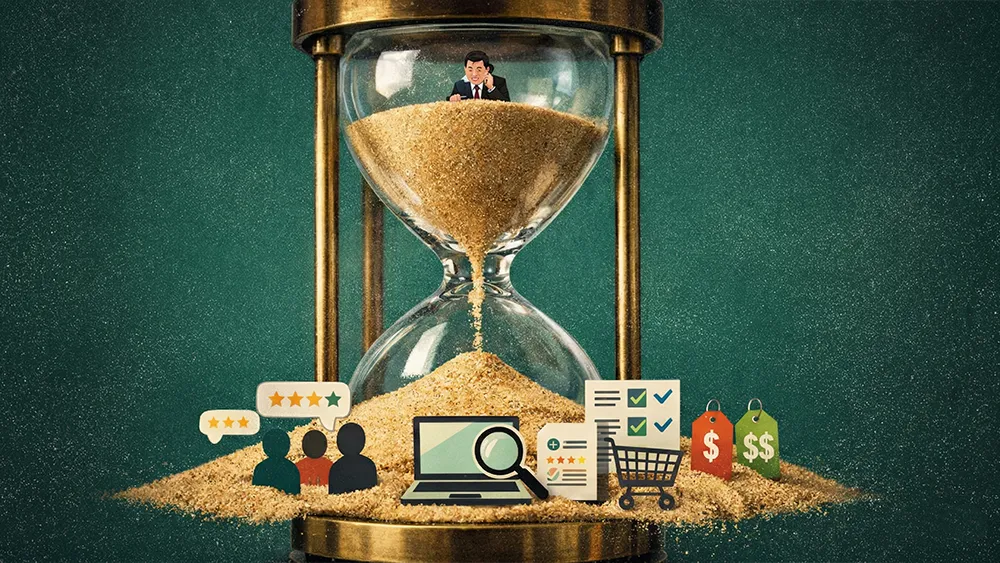
Previously, the whole process of pitching and selling mostly happened after sales came in. But now, it mostly happens before that. By the time they get in touch with your company, only 30% of the job is left.

The days of the cold-call conqueror are over. Today's B2B buyers prefer to figure things out on their own. With inboxes flooded by automated SaaS pitches, professionals are doing their own homework—checking websites, reading reviews, and consulting peers—before agreeing to a demo. With buyers doing the heavy lifting up front, marketing is no longer just a warm-up act for sales. Now, it's responsible for the majority of the convincing before a rep even says hello.
Egine Nalbandian, Head of Marketing at the open-source consultancy Sardina Systems, sees traditional playbooks failing in real time. With a decade spent at the intersection of brand trust and performance marketing for giants like Yandex and Inditex, Nalbandian notes that reaching today’s B2B buyer starts with recognizing who actually handles the pipeline.
“Previously, the whole process of pitching and selling mostly happened after sales came in. But now, it mostly happens before that. By the time they get in touch with your company, only 30% of the job is left," Nalbandian says. She notes that buyers will carry out research on their own or directly consult peers at work. By the time they come to you, there's nothing more than a bit of fine-tuning left to understand if it's a fit before signing. Because of this, marketing needs to be intentional from step one.
Plan B through Z: “Even if you built a good product, you need to clearly understand your scenarios from the very beginning, how you're going to sell it," says Nalbandian. "It's like selling a good versus a bad car. You need to prove why your car is good and worth the money. Marketing is an opportunity to build not only A and B, but the whole alphabet. You have to plan for what happens if your initial strategy fails.”
Skipping the small talk: Since marketing now controls that initial research phase, siloing internal departments often creates a disjointed experience for the buyer. Many high-performing organizations share continuous ownership of the funnel, bringing PR, brand awareness, sales, and customer service into a unified ecosystem. Eliminating silos usually requires a cross-functional approach that recognizes where digital scale ends and human relationship-building begins. “There should be pure collaboration, not competition between marketing leads and sales leads. Even if a lead comes from a sales manager's network, the customer will check the company's marketing side as well. And it's the same from the marketing side. We are not selling on our own.”
You can't talk about scaling this alignment without addressing AI. Nalbandian views the technology pragmatically, noting its utility for optimizing manual tasks, particularly for resource-strapped startups establishing a baseline presence. She likens the current moment to the dawn of social media, where as then with social platforms, experimenting with AI has become a standard operational step. At the same time, pressure to be seen doing something with the technology can drive adoption of an AI go-to-market system before a clear strategy actually exists.
Prompting without purpose: “If the market overuses AI, that expertise becomes a bit fuzzy because you can't switch off your brain and just ask everything to Claude or other AI tools," says Nalbandian. "It's important to keep that prep on your side first: How do you see this process? How would you build that, and why? AI doesn't know all the connections, specifics, and details.”
Keeping up with the algorithms: Nalbandian's observations come from broader industry conversations rather than just her own company’s spending decisions. “If you go to an industry conference, the main question people ask each other is how you integrate AI. It's treated as something you must do right now, at all costs, and I think that's the problem. First, you need to understand what could be optimized for your company, how you're going to sell it, and if people actually want it. You need to do that research.”
Today’s development tools make it incredibly easy to ship features, but building a great product isn't enough to stand out anymore. Deep market context and scenario planning frequently provide the real competitive edge. Founders who treat marketing as a day-one strategy fare better than those who view it as a post-production compliance step.
Build it, but will they come?: “I'm working with many startups and founders who are just starting to work in an accelerator or on their own. Each time I ask, 'How are you going to sell that? How are you going to earn your money to keep the business running?' They're a bit confused. They mostly say, ‘But it's a great tool.’” To build a comprehensive marketing strategy, business leaders need to map out their cross-functional scenarios early, integrating go-to-market planning directly alongside product development. “You need to take the whole process seriously, not just treat it as a tick in a box where you report that you spoke to a marketer and they said it's brilliant," Nalbandian says. "A good marketer will always find gaps and opportunities. Just as you treat your product strategy, you also need to treat your marketing strategy from the very beginning.”
With AI maturing across the revenue stack, predictions abound that automation could eventually replace revenue teams entirely. Nalbandian sees it differently. Based on the operational reality of the flipped funnel, AI excels at scaling volume but struggles with nuance. Software handles the heavy lifting of data processing, which leaves professionals free to build a customer success revenue engine rooted in trust. For many enterprise deals, securing that final signature still relies on emotional intelligence and a human-centric sales approach. “Marketing is never about the easy way to get somewhere," Nalbandian concludes. "There are no shortcuts. There might be some accelerators, but it's something you have to be willing to think through.”




.webp)