
All articles
Per-Seat Pricing Is Dying. Here's What's Replacing It.
Bain & Company published the obituary, even if the headline was diplomatic: "Per-Seat Software Pricing Isn't Dead, but New Models Are Gaining Steam."
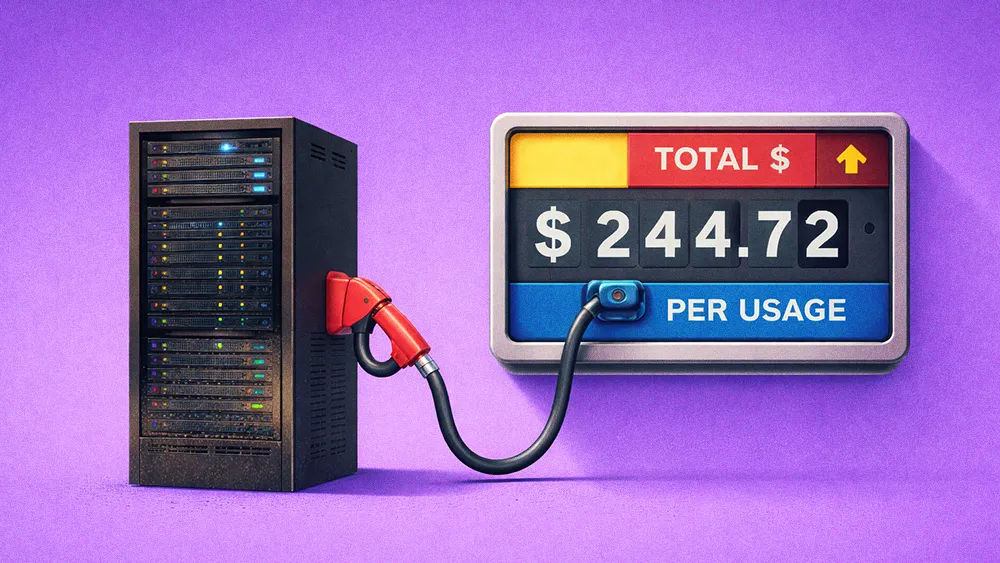
The traditional per-seat pricing model, which has served as the bedrock of the software industry for decades, is facing a fundamental structural crisis. This shift is driven by a simple but powerful change in productivity. When a single developer using advanced coding tools can perform the work of five, or when AI agents handle tasks previously assigned to dozens of employees, the headcount-to-value correlation disappears.
New math: If a team of 100 using a CRM shrinks to a team of 20 because of automation, the software vendor faces a devastating 80 percent drop in seat revenue despite providing more value than ever before.
The shift to hybrid: Software vendors are already moving quickly to protect their bottom lines, as three out of five companies are already using some form of usage-based pricing. This transition is even more pronounced among AI leaders, with 56% currently employing hybrid models that combine the financial predictability of a subscription with the scalability of usage fees for API calls, tokens, or processing volume.
The market is currently converging around three distinct pricing patterns designed to capture the value of automation and AI.
Consumption-based tiers: In this model, customers pay for bundles of capacity rather than headcount. These units might include API calls, operations processed, or AI minutes consumed. By scaling on capacity, vendors ensure their revenue grows in tandem with the actual utility of the software, regardless of how many human employees are logged into the system.
Outcome-based pricing: This is perhaps the most radical shift, where vendors charge based on measurable results delivered. Examples include fees per ticket resolved, per lead qualified, or per contract analyzed. This model shifts the performance risk to the vendor, requiring them to prove constant value to maintain their revenue stream.
Hybrid models: Hybrid structures offer a middle ground by maintaining a base subscription for platform access while adding variable fees for specialized AI-powered features. This approach preserves the revenue predictability that investors and finance teams crave while allowing the vendor to capture the upside from high-volume users.
This transition is not merely a strategic choice, but an economic necessity forced by the high costs of artificial intelligence. Unlike traditional software, which has negligible marginal costs, AI carries a significant "compute tax." Every interaction involves costs for GPU time, tokens, and electricity. This creates variable costs of goods sold ranging from 20 to 40%, a massive leap from the less than 5% associated with traditional cloud software.
For Chief Revenue Officers with an expansion strategy built entirely on adding seats, this growth model has a definitive expiration date. Transitioning to consumption or outcome-based pricing requires a total overhaul of the sales organization. It changes how sales representatives are compensated, how financial teams forecast quarterly performance, and how customer success teams define account health. The winners of the next decade will be the organizations that successfully decouple their revenue from human headcount and link it directly to the digital outcomes their technology provides.




.webp)