
All articles
By Prioritizing Signal Over Volume, Revenue Leaders Scale Quality Without Amplifying Spam
Aurelien Mottier, President of memoryBlue, outlines how to shift from volume-based pitching to data-backed validation while mastering multi-threaded buying committees.
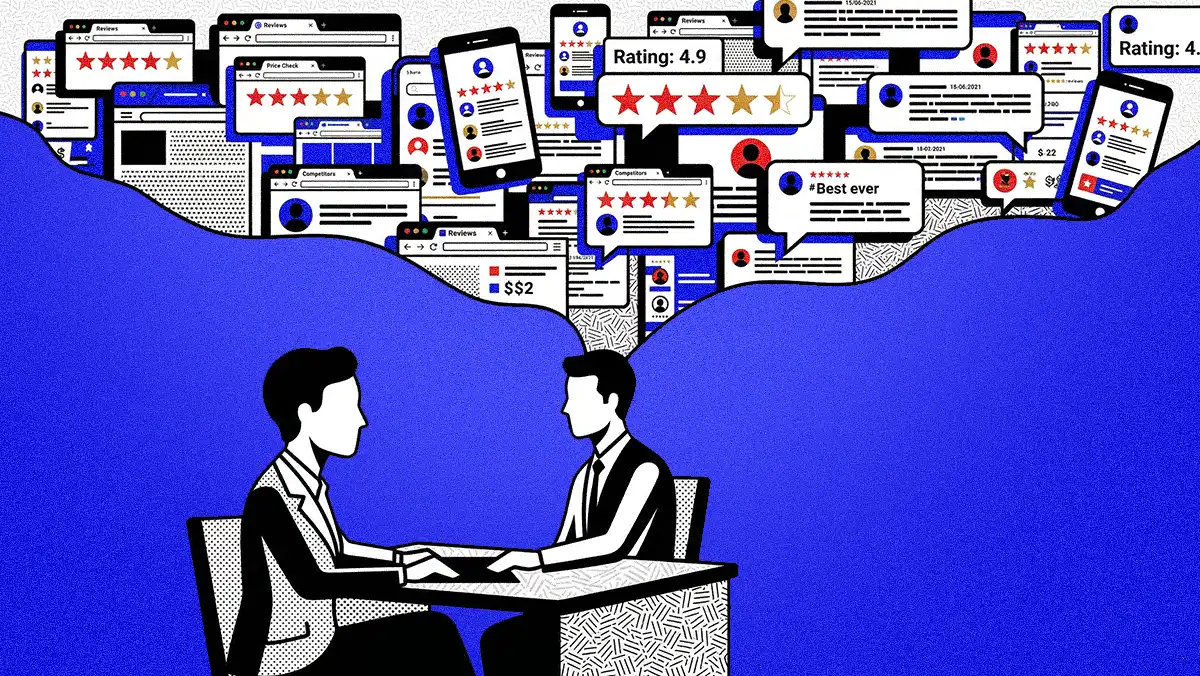
The real challenge isn’t automation. It’s finding the balance between quantity and quality without losing trust in the process.

Revenue leaders mapping out their 2026 sales motions face a reality where AI handles the bulk of early research, leaving human representatives to navigate crowded buying committees. This shift forces a total reset on traditional go-to-market strategies as simple one-way pitching loses its effectiveness. The modern sales professional’s job is now to validate what buyers already think they know and help internal stakeholders reach consensus. By prioritizing high-quality human engagement as a differentiator, organizations can use technology to amplify their intelligence rather than just their volume.
Aurelien Mottier is the President of memoryBlue and previously the Founder of Operatix, having guided the latter through a climb to the top of the outsourced sales provider rankings before a successful merger. His career has been defined by scaling high-performing sales teams for B2B technology giants, and his current role positions him at the helm of a global workforce of more than 750 employees. In a landscape where every sales team has access to the same automated tools, Mottier views high-quality human engagement as the primary differentiator.
"The real challenge isn’t automation. It’s finding the balance between quantity and quality without losing trust in the process." He warns that without clear data and targeting, automation simply scales bad outreach and yields faster rejections. "The trap is that you can go too far with automation. If you do too much, you run the risk of spamming or potentially even damaging your brand." In Mottier's view, leaders must seek a point of equilibrium where they're achieving the desired amount of output while maintaining the ability to validate for quality.
The new buyer journey: According to Mottier, the gap between volume and value continues to widen as buyer behavior moves upstream. "Sixty-seven percent of buyers are doing their first level of research on LLMs," he says. "If you’re not showing up there, you’re not in the conversation." By the time a prospect reaches a human, he says, the conversation leans less toward information transfer and more toward validation and alignment.
Managing brand footprints: Because LLMs rely on a distinct ecosystem of third-party reviews and community discussions, a company’s reputation is often decided long before a sales rep enters the frame. "Those platforms are pumping information from things like Reddit, G2, Clutch, and LinkedIn," he says, emphasizing that sales and marketing teams should collaborate to collect feedback and fine-tune how their brand shows up in those channels.
Adapting to these new buyer habits, Mottier says, requires a total reset on enablement. Historically, many sales organizations required reps to spend the majority of their time performing in live conversations and relatively little time practicing. AI tools now make it possible to flip that ratio, giving individuals continuous pre-game and post-game coaching and turning technology into an engine for talent enablement. "You have more intel than ever available at your fingertips to train yourself before you go on a call. Without too much heavy lifting, you can analyze your calls afterward and have one-to-one personal coaching to make you a better rep or to make your team better," he explains. "Then you can look at your whole week, your whole month, your whole quarter, and you can see your scope of competency progressing. This is what AI can do, and I don't see enough people using that effectively."
Elevating the majority: Mottier believes this approach works best when layered onto already competitive teams. Rather than accepting a harsh version of the 80/20 rule where a small group carries most of the quota, he envisions a culture where AI-driven coaching elevates the entire team. "We have to ask, 'How do we help them to close bigger deals and better deals? How do we help them to improve their conversations? What information can we give them so they can do better?'"
Many revenue leaders are turning to pipeline intelligence platforms to interpret prospect signals and estimate win probabilities, aiming for more precision than manual forecasting. As these tools take on the analytical heavy lifting, sales professionals can dedicate their attention to navigating internal politics and multi-threaded buying committees. "Having the right conversation, understanding how Person A and Person B will work together, putting them in the same room if they are fighting, and weighing the pros and cons to get them to agree when they are not agreeing requires deep emotional intelligence," Mottier says. From his perspective, reps should be seen as non-threatening advisors, which depends on a culture where they are willing to walk away if the product is not the right solution.
Ultimately, Mottier believes digital resilience doesn't run on code, but on human nuance. "That emotional intelligence, some of it you can't train. Some of it comes from your social evolution, your background, your education," he says. This level of self-awareness and situational sensitivity acts as the last mile of the sales process, ensuring that the human touch remains the deciding factor when logic and data have already been satisfied by automated tools. "There are so many things that can automate the salesperson, but what can't be automated is having great conversations."



.webp)