
All articles
Customer Success is Now a Revenue Function, and There's No Going Back
By the year's end, 80% of teams will use AI to split retention from expansion, using hard financial data to earn a seat at the leadership table.

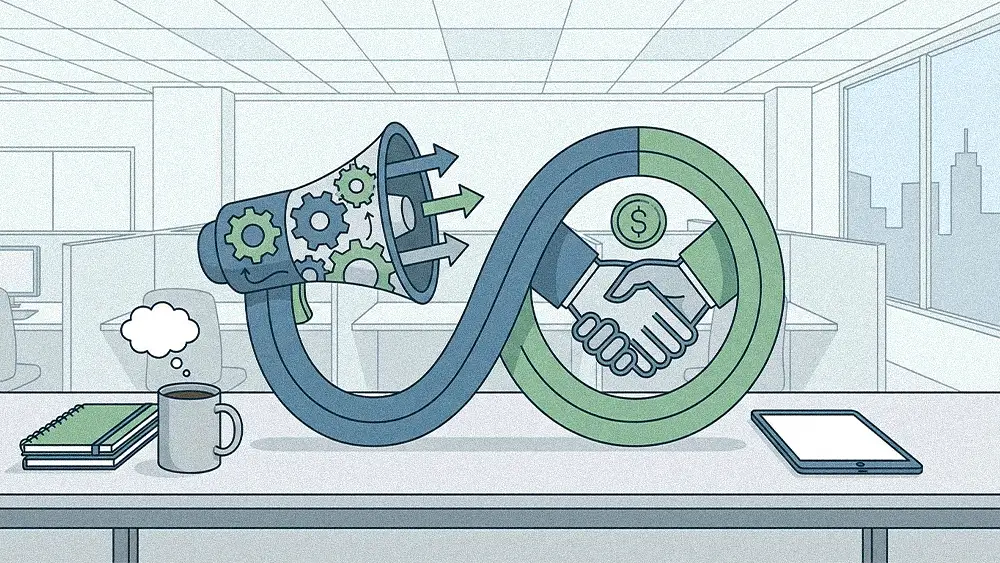
For mature software organizations, the financial center of gravity has shifted from new sales to existing accounts. As much as 80 percent of the value creation achieved by the world’s most successful growth companies comes primarily from unlocking new revenues from existing customers. This massive contribution has forced a permanent change in how businesses view the customer success department. It's no longer a support center focused on satisfaction alone. It's a critical revenue engine that must justify its existence through hard financial data.
Goodbye to the bundle: The traditional model of bundling all post-sale activities into a single role is beginning to dissolve. Organizations are increasingly splitting the responsibilities between account management and customer success.
Skills for success: This shift acknowledges that expansion and retention require entirely different skill sets. Expansion demands sharp commercial instincts and the ability to close deals, while retention requires operational empathy and a deep understanding of the user experience. Combining these into one position was originally a move to save costs, but it rarely served as a successful long-term strategy.
Artificial intelligence is the primary catalyst for this organizational split. By the end of this year, 80% of enterprise teams will have integrated AI into their workflows. These tools can handle the heavy lifting of pattern recognition through predictive churn scoring and health monitoring. When AI identifies a risk or a renewal opportunity, it triggers an automated intervention. This allows the technology to manage the data while humans focus on the nuanced work of relationship repair and strategic consulting. Experts like ChurnZero CEO You Mon Tsang predict that the shift will give CSMs between 25 and 50% more bandwidth.
Here to stay: This new level of revenue accountability is not a temporary trend, but a permanent fixture of the corporate landscape. Leaders who embrace this reality by aligning with sales and finance departments are securing their places at the executive table. Those who resist this transition risk having their budgets absorbed by the sales organization.
Executive table metrics: Success in this environment depends on mastering a specific set of financial metrics. Leaders must look beyond soft scores like customer satisfaction to four key indicators that matter most now: customer lifetime value, time to value, cost to serve, and revenue per resource. These figures provide the necessary evidence to link team efforts directly to the bottom line.
A structural disadvantage exists for any team that still reports to a leader without specific revenue targets. The winning model for 2026 clearly defines these boundaries, with success teams owning retention while account managers owning expansion. Both functions operate on a foundation of AI-powered health scoring to ensure that every action is data-driven and results-oriented.




.webp)