
All articles
Sales Leaders Find Winning AI Playbook By Addressing Alignment Before Automation
Taylor Conyers of Hootsuite outlines a human-first AI model where CSMs turn data into trust, using structure and judgment to drive retention and growth.
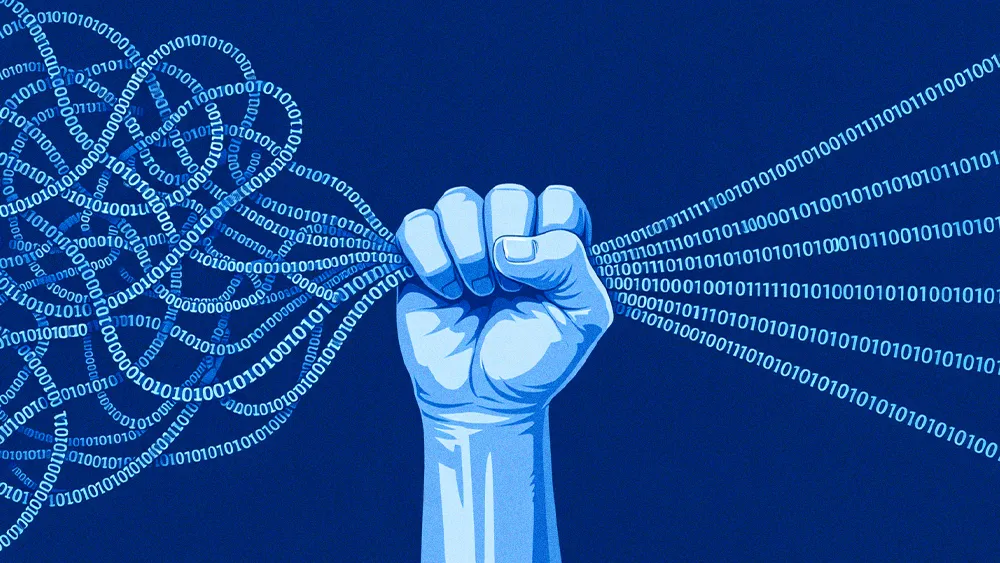
AI is your sidekick, not your main driver. You still need the human connection to turn insights into trust and strategic impact.

As companies increasingly deploy AI to handle customer retention and assist with driving conversions, leaders are forced to grapple with the technology's proper role. Though its momentum is clear and the possibilities are promising, the most effective customer success strategy doesn't treat AI as the star of the show. Instead, it casts AI as a strategic sidekick to an empowered human expert.
Taylor Conyers is a Senior Enterprise Account Manager at Hootsuite with extensive experience helping organizations turn complex technology into tangible business outcomes. Her philosophy is that the best use of AI relies on a disciplined, human-first approach that prioritizes trust and strategic insight over pure automation.
"AI is your sidekick, not your main driver. You still need the human connection to turn insights into trust and strategic impact." She says this sidekick model creates a clear division of labor. AI performs the quantitative heavy lifting, freeing up the human CSM to act as the data translator who interprets the numbers and builds the qualitative story around them.
Divide and conquer: The division of labor is especially important as AI innovation continues to outpace customer adoption, creating a gap where human strategy offers a key advantage. Where a machine might flag a usage drop as a risk, only a human knows the client just wrapped up a major campaign. "As the CSM, you need to uncover the story behind it," Conyers says. "What questions are you going to bring to your customers to really understand that story? Because that's something that AI cannot do."
Full focus: On the flip side, she says AI is great at acting as an assistant, efficiently turning conversations into actionable expansion plans. "AI can review the full transcript to identify themes, risks, and sales opportunities, which are really hard to pick up in real time." Delegating this aspect of the conversation lets her devote her uninterrupted attention to the client. "This allows me to be laser focused in my meetings instead of just taking notes."
To illustrate the necessity of having a human at the helm, Conyers likens AI to a GPS. "It can tell you the fastest route to get somewhere. It can show you traffic patterns. But it doesn't know exactly why you're traveling to that destination," she explains. Just as it does when navigating a vehicle through busy streets, context matters. "Maybe the AI is suggesting, 'Alright, ask them about budget,' but you know that customer is not there yet. That's really what the CSM has to decide as the driver."
The gut check: According to Conyers, human skill remains irreplaceable when it comes to gauging a client's sentiment, understanding their internal politics, and knowing if the timing is right. "You have to ask yourself as a strategic CSM, 'Okay, does this person trust me enough yet for me to even get to that budget conversation?' If it doesn't make sense to me, it's not going to make sense to the client."
Earning the right: This discernment, she says, builds the trust that helps drive tangible business outcomes like longer retention and lifetime revenue growth. "When you go into meetings knowing this information, you come across as a strategic partner, which is going to make it easier to close the opportunity."
Successfully implementing this approach at scale requires a solid organizational structure that guides AI toward creating clarity rather than confusion, since technology tends to amplify the processes that already exist. "If you have a bad foundation, everything you build on top of that is just going to collapse," Conyers shares. The answer, she says, is a robust playbook that defines ownership between sales and customer success. "Everyone should know what their lane is, but at the end of the day, the outcome needs to be the same: to make sure that the customer is always in thought with every decision that you make."
Ultimately, Conyers suggests the most valuable shift is reframing how CSMs view AI. When used strategically, it can enable a deep and valuable understanding of a client's entire business. "I love to go into ChatGPT and ask, 'What does this company do to make money? Explain it to me in a very simple scenario.' I think if we can reframe the narrative from 'AI is scary' to 'How can AI help you better understand what your client does?' that's a game changer."





.webp)