
All articles
Marketing Leaders Flip The Funnel As LLMs Take Over Buyer Education
Kathleen Booth, VP of Marketing at Sequel.io, explains how to outpace the sea of sameness by trading uncurated AI output for a human-led, engagement-first marketing engine.
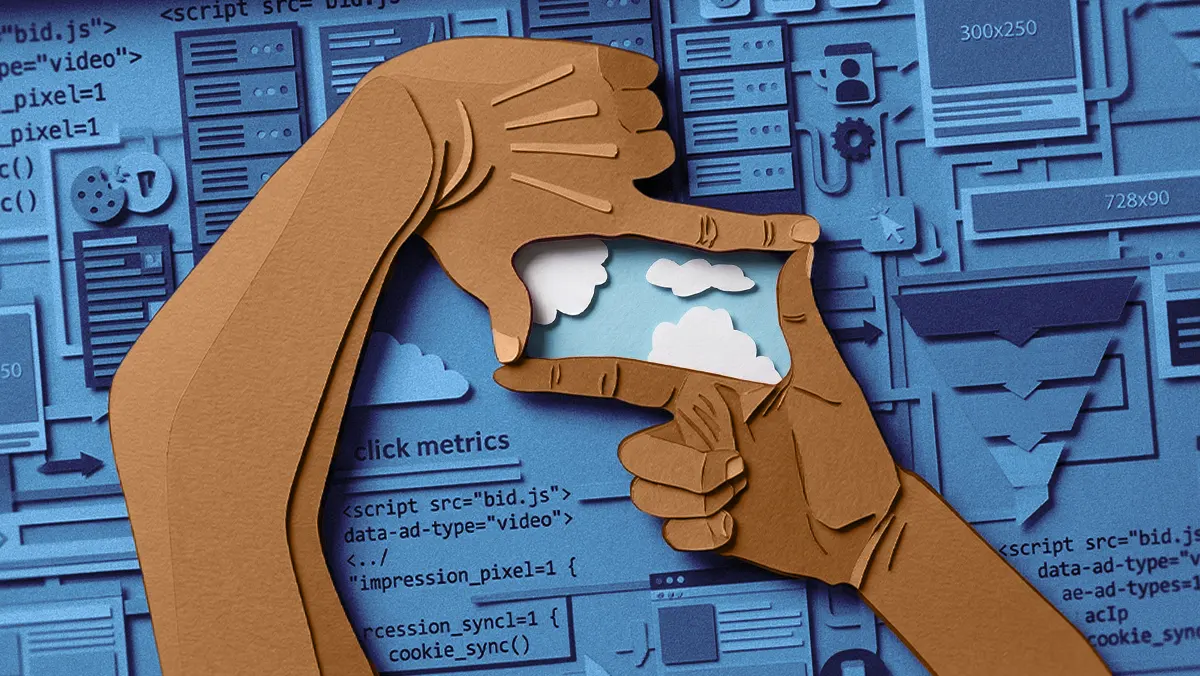
AI can handle the repetitive and analytical, but the strategic judgment that connects with human emotion is still irreplaceably human.

Open up LinkedIn and you'll inevitably scroll past a post claiming artificial intelligence is about to replace the VP of marketing. The pitch usually suggests that because models can generate campaigns, analyze performance, and write copy, senior strategic leaders are suddenly redundant. The mechanics of how these tools actually work, however, tell a different story. Generative models are predictive, delivering the most likely answer to a prompt. In a competitive market, relying on the "most likely" strategy just generates the same campaigns as everyone else. Used without human curation, these tools actively commoditize a brand.
Kathleen Booth is critical of the AI-as-CMO hype. As the VP of Marketing at Sequel.io and veteran B2B marketer, she's a deep believer in AI's power to drive growth. Still, she believes there are some clear-cut lines between what software can do and what buyers still demand from people.
"AI can handle the repetitive and analytical, but the strategic judgment that connects with human emotion is still irreplaceably human." It's a distinction she believes too many leaders are failing to make, and one that will increasingly separate the brands that break through from those that disappear into the noise.
The prediction engine problem: Booth's central concern with over-relying on AI is structural. Generative AI is fundamentally a prediction engine, answering with what it calculates is most likely to be correct. That makes it excellent at synthesis, analysis, and process-driven execution, but also makes it a factory for convention. "If you're in a competitive industry like insurance and you ask AI what your marketing strategy should be, it's going to come back with something that looks a whole lot like what every other insurance company is doing," Booth says. "What that results in is a sea of sameness."
Surprising versus safe: In her view, great marketing rarely lives in the most likely answer. It depends on the pattern interruption of an unexpected idea that catches people off guard. "The best marketing is the marketing that surprises you or that's different, and that's not what AI is good at right now." She explains that the tool is only as distinctive as the thinking that feeds it. Without a strong human point of view driving the process, AI will default to safe, generic, indistinguishable work.
Rather than being forced to choose between rejecting AI or surrendering to it, Booth advocates for what she describes as a bookend approach to content creation. Humans own both ends of the process, while AI handles the middle. "The whole point of creating content is usually to have some kind of a point of view," she notes. "So rather than outsourcing your critical thinking to AI, give AI your critical thinking. Tell it what you think and why. Then let it organize your thoughts and package them." To illustrate, Booth shares how she uses a voice input tool to record her unstructured thinking, lets AI draft from that raw material, and then returns to edit, refine, and put her stamp on the final product. The result is content that moves at machine speed, but sounds like her.
Full disclosure policy: Booth practices what she preaches in her weekly Substack newsletter Code Meets Creed, where she includes a disclosure paragraph at the end of every issue. "I tell people I use AI to help me write it. If you don't like that, this isn't going to be the newsletter for you. I think once you decide where you stand, you should say it. That transparency is what builds trust."
Your ideas, with an AI assist: The same principle extends to visual content. Booth trained AI on a specific visual style and color palette for her newsletter imagery, so even though AI generates the graphics, the creative direction is hers. "I'm still conceiving of the image. AI is substituting for my lack of graphic design skills. The point is that there's a way to use these tools and still make it feel uniquely like you."
Beyond content creation, Booth sees AI reshaping the buyer journey itself and argues that most marketers haven't fully reckoned with the implications. Historically, buyers came to company websites for education first, then engagement. They'd research products, compare features, and check pricing, and marketers would try to convert that traffic into demos, conversations, or deeper interaction. That equation, Booth argues, has completely inverted. "The educational information still lives on your website, and it should. But the answers are increasingly showing up in search engines and LLMs. People go there first, and those platforms are more capable than ever of harvesting your content and delivering detailed, contextual answers."
Reversing the education pipeline: The result of this shift is that it's becoming much harder to attract visitors for education alone. Booth sees opportunity in the reversal. "If you want people to come to your site, you have to start with engagement, like webinars, product demos, ROI tools, and on-demand tours. Then introduce education once they're there," she advises. "It's the same information, just in reverse order, and now you control how it's presented, not Google or an LLM."
Looking ahead, Booth identifies two priorities for building marketing teams that can thrive alongside AI. The first is hiring a dedicated GTM engineer, who is someone focused entirely on identifying and automating inefficiencies across the go-to-market function. "There is so much low-hanging fruit in just about every company I've come across," she says. "It's not about replacing people. It's about deferring hiring. You can grow without adding headcount at the same pace if you automate intelligently." The second priority isn't a specific role, but a trait she screens for in every hire. "The most important thing is to look for somebody who is deeply curious about AI. You want someone with a high figure-it-out factor, who wants to learn the platform, who wants to hack their way to a solution." She views the future of marketing as a race to see who can best apply human curiosity to technical scale. Success in this environment depends less on a fixed set of skills and more on an aggressive, investigative mindset toward emerging tools. "You don't have to know everything immediately, but you have to have the desire to figure it out."



.webp)