
All articles
Replacing Fire Drills With Structured Frameworks Turns At-Risk Accounts Into Expansion Opportunities
ClearPath CX Founder Mark Bernardin explains why successful account recovery requires trading reactive firefighting for stakeholder alignment and long-term program resiliency.

Recovery works best when you isolate one or two outcomes at a time and make progress visible to the customer. The key principle is focus.
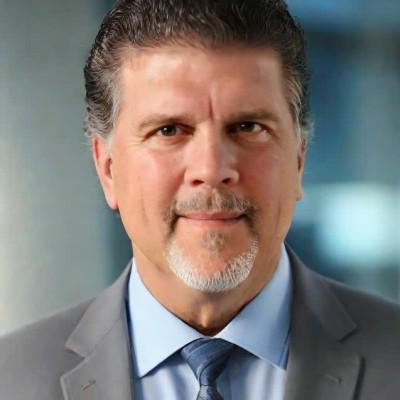
While dashboards can tell you if a customer is logging in, they notoriously struggle to flag when the executive sponsor is disengaging. When an account shows early signs of risk, some teams respond by ramping up activity late in the cycle, hoping for a last-minute save, but that reactive reflex rarely works. A proactive approach starts earlier and focuses on intentional, operational pivots. Moving away from the typical fire drill toward a structured recovery framework offers a practical way to improve retention and lifetime revenue.
Helping brands recover millions in ARR with such a framework is Mark Bernardin, customer success author and founder of ClearPath CX. Bernardin honed his methodologies while managing large enterprise accounts and making several Fortune 100 recoveries, including Lowe's, The Home Depot, and Ernst & Young. Bernardin advocates for swapping chaotic rescue missions for a series of achievable milestones by narrowing, rather than widening, the scope of a recovery plan.
"Recovery works best when you isolate one or two outcomes at a time and make progress visible to the customer. The key principle is focus." To move at-risk accounts into recovery mode, Bernardin uses a structured 90-day framework he calls the Path to Green, a time-bound operational pivot designed to rebuild trust through momentum.
Stabilize and re-engage: During days 1-30, CSMs work on stabilizing the account. "It starts with a get-well plan that rebuilds stakeholder alignment and expands coverage beyond a single champion, then focuses on delivering visible progress in defined intervals," he says.
Address root causes: Days 31-60 are about resolving the technical or process hurdles that led to the disengagement in the first place. "You have to have great communication skills, but there also has to be a pretty deep level of technical skill as well." Bernardin notes that while the rep may not be a software engineer, they need to at least speak their language. "You do need to be able to do some troubleshooting, take that back to the CSA or CSE, and work with them."
Restore momentum: The final 30 days are about positioning the account for future expansion. By this stage, the recovery should feel like a distant memory, replaced by a clear roadmap for growth. "As stakeholder density increases and progress becomes measurable, renewal risk decreases, forecast confidence improves, and expansion becomes a more natural outcome of a stabilized account."
Too often, Bernardin sees teams try to make an 11th hour recovery with a flurry of activity. This reactive approach fails because it treats the symptoms of an account failure, like a lack of communication, rather than the disease itself, like the loss of business value. He points out that without addressing the underlying disconnect, any recovery is merely temporary. "If you only rely on scattered activity and firefighting, that's not going to set you up for for success at all. That's not repeatable. That's not scalable." By contrast, bringing everyone back to the same page with regards to goals, interests, and expectations transforms stakeholders from passive participants into active partners and advocates, mitigating future risk. "You don't fix risk with more activity. You fix it by restoring alignment," he says.
Seeds of growth: A stabilized account doesn't just renew. It spreads. Bernardin views a healthy relationship as a root system that naturally seeks out new territory within a client’s organization. "Once you help out one department and see a need in another, the stakeholder map almost seems to grow itself. If you show value in one part of an organization, it's going to send out roots on its own."
Expanding the value proposition: He recalls a time when such relationship building became the focus while managing a layered pharmaceutical account at Swimlane, an agentic AI automation platform for security functions. "We had gone about as far as we could with the relationship inside of their SOC, but orchestration and automation can be used by anybody." Recognizing that the company was heavily regulated, he tailored his message to the compliance and HR departments, positioning his SOAR tool as a way to automate the tedious regulatory aspects of their work. "We found a foothold inside of their compliance team, and they said 'Why don't you talk to the HR team?' So we did, and we eventually moved into HR as well."
Moving beyond immediate recovery, Bernardin urges reps to prioritize long-term account durability. He advocates for a Program Resiliency Plan that serves as a practical safeguard for business continuity, testing whether a customer’s success strategy can withstand routine turnover on either side of the relationship. "If your champion left tomorrow, would the account success plan crumble? Is the plan for success able to be discussed inside of the boardroom without you, at the customer's location?" He argues that true financial performance depends on long-term account stability, where the success of the product is firmly entrenched in the customer’s world regardless of external or internal changes. "The account should be so resilient that any change at the customer's location or in their environment does not affect what's happening with the account success."





.webp)