
All articles
Fixing Your Pipeline Requires Killing Your TOFU Obsession, Says memoryBlue Global Operations Director
memoryBlue Global Ops Director Hannah Allen reveals why the "more is more" sales model is failing and how to pivot SDR teams toward high-intent, revenue-ready pipeline.
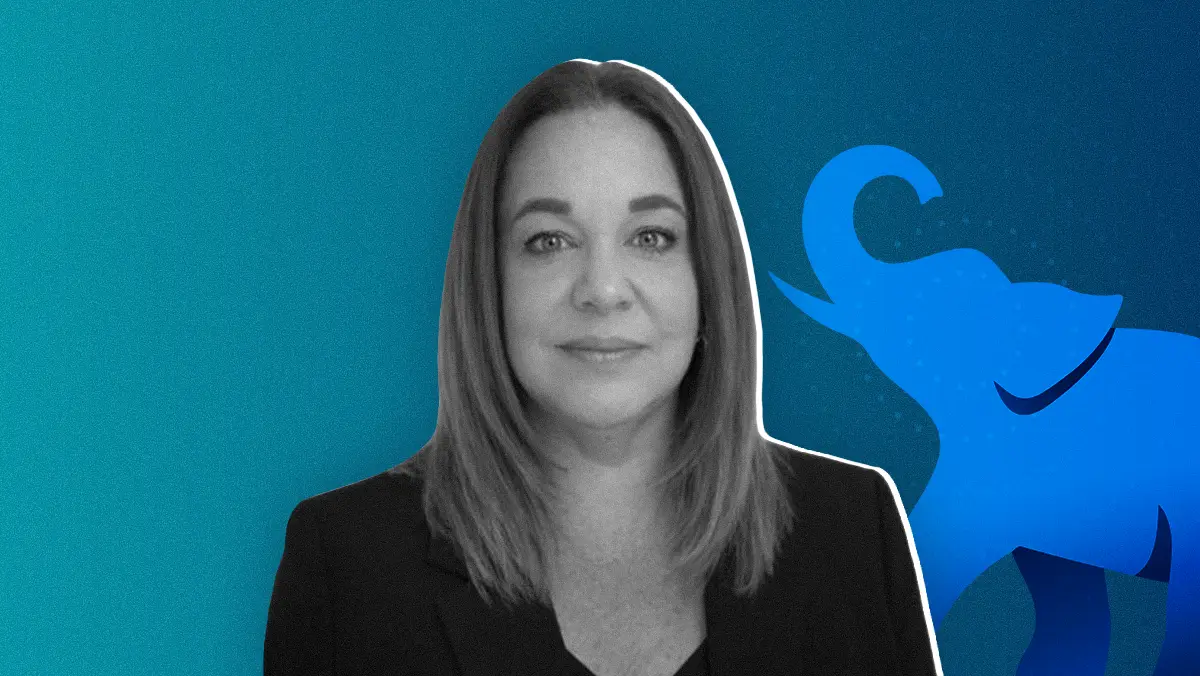
Pipeline today isn’t just about activity or appointments. It’s about the insights you bring, the voice of the customer, and how that translates into real revenue.

The early SaaS era ran on a simple assumption that more tools and more outreach meant more pipeline. If the numbers weren’t hitting, the solution was almost always to increase the volume of cold calls and LinkedIn messages. But as the market matures and buyers become more insulated, that volume-driven model is fracturing. For many go-to-market teams, a calendar packed with introductory meetings now looks like an expensive vanity metric rather than a signal of forecastable revenue. Generating actionable opportunities now depends on moving past raw outreach volume to uncover actual business pain and align with realistic buyer timelines.
Hannah Allen, Director of Global Operations at memoryBlue, has spent almost a decade navigating this evolution. She previously served as the Operational Orchestrator for Operatix, managing remote teams across EMEA, APAC, and the US leading up to the company’s 2023 merger with memoryBlue. From her vantage point, predictable revenue is less about booking as many meetings as possible and more about what happens after the first conversation.
"Pipeline today isn’t just about activity or appointments. It’s about the insights you bring, the voice of the customer, and how that translates into real revenue," says Allen. For reps, the mandate has shifted from simple appointment setting to delivering meaningful market intelligence and high-intent revenue impact.
Getting to the root cause: When pipeline stalls, leadership often defaults to blaming the top of the funnel. However, Allen believes that the real breakdown usually happens long before a call is ever placed. "It may be that their marketing material misses the mark or they don't have the tools to show intent-type data. The reason companies come to memoryBlue is because they haven't been able to break down that door themselves."
Matching message to recipient: A common misdiagnosis, she says, is conflating brand awareness with lead generation. Even giants like Microsoft and Google face hurdles where end-users assume they are too expensive or complex, creating a gap that blitzing the phones can't fix. According to Allen, the fix isn't more activity. It's better targeting and understanding of buying signals and personas. "A full top of funnel means nothing if you’re not speaking to the right person with the right message at the right time. It needs to be compelling enough that they really can’t say no to looking at it."
The most significant evolution in the SDR role is the depth of the conversation. In the past, an SDR’s job ended the moment a calendar invite was accepted. Today, they're asked to act as consultative partners who can uncover tangible business pain points and quantify the cost of inaction for a prospect. "We drill down into the business pain and the business value," Allen explains. "Is it going to save you time? Is it going to save you money? Are you going to get further ahead of the curve? What is the cost if you do nothing?" This depth allows the sales organization to distinguish between a 'nice-to-have' conversation and a strategic priority.
Specialized relationship builders: To support this shift toward quality intel, Allen describes an emerging organizational structure: the internal sales representative, or ISR, that serves as the missing link between the entry-level SDR and the seasoned AE. "It’s almost a closing role," Allen explains. "Instead of just having an appointment booked and an appointment occurred, we’re then having two, three, four, or maybe five more meetings with that prospect to really qualify it to the point where they say 'okay, now let's run a POC.'"
Built-in career development: By incentivizing quality and pipeline progression rather than just booked meetings, Allen says, organizations can ensure that AEs are only spending time on highly qualified, high-value opportunities while simultaneously creating a more natural career trajectory for their reps. "A lot of our reps come into the SDR role knowing that they're not going to stay as an SDR forever. They want to become an account executive. This lets them see what happens in that middle ground."
Allen highlights that modern leaders must measure timelines above all else. A full top-of-funnel is meaningless if every prospect is tied to an 18-month budget cycle. In her view, the goal for the SDR is to understand what the timeline is, then find the decision-maker who can accelerate that timeline. "If we're hearing, 'This looks great, but now is not the right time.' When is the right time? If they say eighteen months, what's going to happen between now and eighteen months' time? It's understanding more about their timeline and trying to make sure you're in front of the decision maker that can prioritize it."
Cultural context considerations: Another area where Allen often sees teams stumble is scaling internationally. She acknowledges that it's tempting to take a successful US playbook and translate it for EMEA or APAC, but warns that this is a recipe for failure. The nuances of global go-to-market strategy can range from legal hiring requirements to the specific formalities of a cold call. "Each country has its own way of building a relationship. In the U.S., it would be 'Hi, John.' In Germany, it'd be 'Hello, Mr. Smith.'"
Take copy and paste off the table: Selling internationally, she says, requires more than just language translation. Reps must have an understanding of cultural psychology. For example, Allen notes that in Central Europe, prospects often dislike being told their own pains by a salesperson, which is a stark contrast to the challenger sale model popular in North America. "There are so many different nuances depending on the country you're going into. Companies think they can copy and paste a strategy, and they really can't."
For C-suite leaders looking to fix their pipeline, Allen has straightforward advice. "Don’t get blinded by the top of funnel." She suggests that leaders should audit their conversion rates at every stage and use data, leveraging AI where appropriate, to find patterns in why prospects are ghosting or stalling. "Look at the conversion. How many of those convert through each additional stage before it gets to actually being signed? Then look at the insights. What patterns are you seeing? That’s going to make everybody’s life easier."





.webp)