
All articles
Localized Proof Points and Cultural Understanding Separate Successful International Expansion From Wasted Spend
Hannah Allen, Senior Managing Director at memoryBlue, breaks down why cultural buying behavior determines whether B2B companies scale or stall in new international markets.
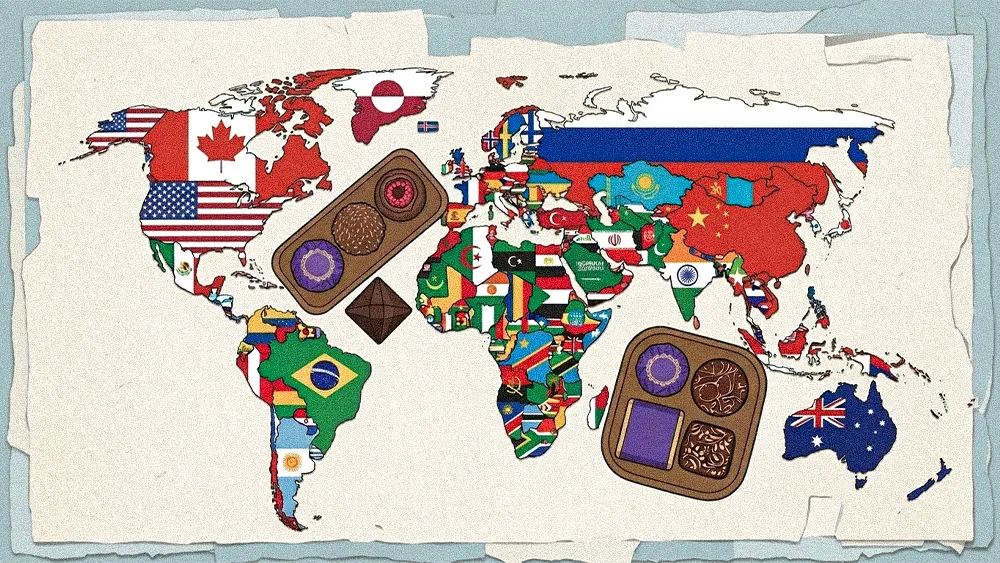
Just because you know what works in the U.S. doesn't mean you can pick it up and put it in another country and expect to see the same results.

Expanding into international markets is one of the highest-leverage growth moves a B2B company can make. It's also one of the areas where companies underestimate the complexity. Across industries, a pattern repeats where a company builds a proven go-to-market motion in the U.S., decides to go into Europe or expand into APAC, and deploys the same playbook with minimal localization. Within months, pipeline stalls, reps burn through prospects, and leadership questions whether the market is viable. The market usually is, but the approach wasn't.
Helping teams avoid this misstep is Hannah Allen, Senior Managing Director at global sales development firm memoryBlue. Allen has spent over a decade building and managing international sales programs across EMEA, APAC, and LatAm for B2B technology companies. She has direct experience running outbound campaigns in dozens of markets and has seen firsthand what happens when companies treat regions as monoliths and assume that what works in North America will travel unchanged.
"Every single one of those markets is different. You can't just scale by copying and pasting a playbook. That won't work because the way people buy, build trust and engage in sales conversations changes dramatically by region," Allen says. Her core insight is that international expansion is a sales-motion problem rather than a messaging one, and solving it requires understanding how buyers in each market want to be engaged.
Cultural buying behavior drives the sale
Allen maps the differences in concrete terms. In the U.S., sales conversations tend to be fast-paced, direct, and value-led. Discovery calls move quickly, and one or two conversations can get the sales process rolling. Germany operates on an entirely different logic. Detail and credibility come first, fluffy messaging gets dismissed, and the challenger-sale approach of pointing out what a prospect is doing wrong is a reliable way to lose the conversation before it starts. "German decision makers want the facts, and they want to build credibility first. Those are nuances you only really understand once you've worked in those regions."
In Singapore and Japan, a lot more emphasis is placed on relationship-building and credibility up front. The beginning of the sales cycle can feel very slow compared to the U.S., but once that trust is there, things may start to move much faster. "The sales cycle at the beginning is very, very slow. Then once you get that credibility, in some cases things can move very quickly."
Where the cracks start to show
The operational failures Allen sees most often follow a predictable pattern. A company enters a new market with an English-speaking rep, U.S.-centric validation points, and no localized collateral. The rep references American-known brand names like Nike, Tesla, or Hershey's as proof points. In other parts of the world, those names are recognized but may not carry much weight. "You're better off selling with something meaningful and impactful locally," Allen explains. "If you're selling into Germany, referencing brands like Adidas, BMW, or Lindt is probably going to resonate more than purely U.S. examples. It's the same validation strategy, just localized."
Language creates an even sharper divide. Buyers in most European and Asian markets can hold a business conversation in English, but credibility builds faster in their native language. Allen recommends native or near-native speakers, like someone who may live in the UK but speaks fluent German because of family background. "You will build trust much quicker if you're doing it in their language. And it's not just conversational language. It's business language. There are nuances and ways of communicating business value that land much more naturally in someone's native language," she notes.
The mismatch can go beyond the initial outreach, too. If a native-speaking BDR books the meeting, but the account executive is based in the central U.S. and only speaks English, that continuity can break very quickly. The AE is suddenly having to navigate time zones, cultural differences, tone, and a completely different conversational rhythm without the context that made the first conversation successful.
Compliance can shut you down overnight
One of the most dangerous blind spots in international expansion that Allen flags is compliance. She points to Germany's strict email regulations as an example. There, mass marketing emails without proper consent can result in significant fines. Many companies don't discover this until after they've blasted a purchased list and subsequently realize they've created a problem. "I've seen things fall apart quickly from doing big marketing email blasts. That is a massive no-no. You can be fined a lot of money. But if you don't have that knowledge, you just think, 'I've got a big list, I'm going to send 200 people an email.' That could shut you down."
Cold-call tolerance varies just as sharply. The U.S. has relatively high pickup and conversion rates from cold outreach. In many parts of Asia, tolerance for cold outreach can be much lower and reps may get blocked much more quickly. Markets like Germany and Austria require double opt-in before email outreach is even permitted, which means the outreach strategy itself often needs to change, not just the language.
Don't launch everywhere at once
Allen's strongest tactical advice is to resist the urge to go too broad too quickly. Unless the brand is already globally recognized, launching across multiple markets simultaneously spreads resources too thin and makes it much harder to understand what's actually working before you scale further. "Don't try to do all of them at once," she says. "You want to establish what's working first and then see what can be replicated. And don't pick Europe as a whole and cover it with one English speaker. If you want to cover Europe, make sure you have a German speaker, a French speaker, an English speaker, and so on." She notes that there may be opportunities to create efficiencies across certain regions or with multilingual speakers, but companies still need to respect the differences between markets.
KPIs, Allen says, must also reflect the original reality. A company generating ten qualified leads per month in North America, where the brand is established, the language is native, and the time zones align, cannot expect the same output from a new market where none of those conditions exist. "There is an element of learning that needs to go along with it. Just because you know what works in the U.S. doesn't mean you can pick it up and put it in another country and expect to see the same results," she asserts.
Partnership over transaction
For companies that engage outside expertise to support international expansion, Allen emphasizes that the relationship has to function as a true partnership. memoryBlue brings global delivery expertise, multilingual reps, and market-specific knowledge of what works in each region, but the client has to show up too, coaching reps on the product, collaborating on collateral and messaging, and staying engaged through the learning curve. "We are an extension of your sales team," Allen says. "We're not transactional. We're experts in opening conversations and helping companies build credibility in new markets. But we rely on our partners to work with us, coach our reps, and help us understand what success looks like in their business."
The companies that get international GTM right, she says, are the ones who avoid presuming that their U.S. playbook will work seamlessly across borders. Instead, they treat each market as its own motion, invest in the people and language capabilities to execute locally, and understand that how the message is delivered matters just as much as the message itself. "It may be the same product, the same persona, and the same ICP, but the conversation and the way you deliver the message is different."





.webp)