
All articles
Gartner Finds the Sales Rep's New Job Is Fact-Checking the Buyer's AI
For two years, the loudest prediction in B2B was that AI would finish what digital self-service started and push the sales rep out of the buying process for good.
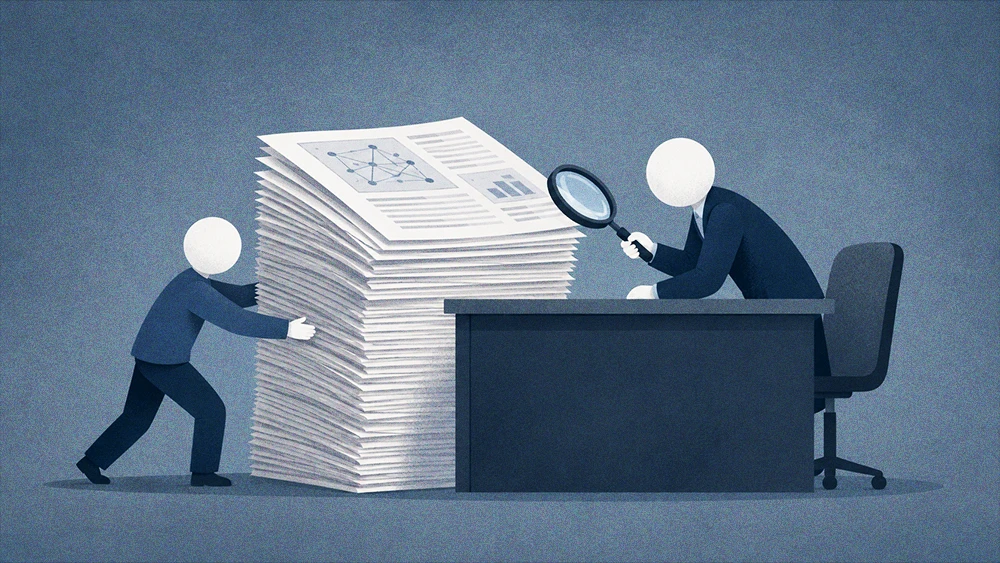
For the past few years, the loudest prediction in B2B was that AI would finish what digital self-service started and push the sales rep out of the buying process for good. New Gartner research says the opposite is happening. Buyers are doing their homework with AI, then bringing it to a human to make sure the machine got it right. The rep is not being replaced. The rep is becoming the fact-checker.
According to a Gartner survey of 645 B2B buyers conducted in late 2025 and presented at the CSO & Sales Leader Conference in Las Vegas this May, 69% of buyers prefer to validate AI-generated insights with a sales rep before acting on them. Nearly half of buyers, 45%, said they used generative AI during a recent purchase, mostly to research vendors and products, and the average buyer consulted seven different information sources along the way.
Here is where it gets uncomfortable for anyone building a rep-light go-to-market motion. The same buyers who want a human to sanity-check their AI research also say they would rather not deal with a rep at all. Gartner found 67% prefer a rep-free experience and 70% want a completely digital, self-service purchase. Buyers are not asking sellers to come back. They are asking them to show up at very specific moments and stay out of the rest.
The trust problem AI created
The reason buyers keep one hand on the rep is simple: they do not fully believe what the machine tells them. In the same survey, 51% of buyers said they were more likely to encounter misleading information from generative AI, compared to 49% who said the same about sales reps. That is close to a coin flip, and it explains the whole dynamic. Buyers now walk into deals pre-armed with research they only half trust, from a source that answers instantly and never says "I don't know."
Robert Blaisdell, VP Analyst and Chief of Research in the Gartner Sales practice, put the takeaway bluntly for sales leaders, warning them not to read the self-service preference as proof that sellers matter less. In his words, it means <a href="https://www.businesswire.com/news/home/20260520585188/en/Gartner-Survey-Finds-69-of-B2B-Buyers-Turn-to-Sales-Reps-to-Validate-AI-Generated-Insights">"sellers need to show up differently"</a>: helping buyers confirm information, reduce risk, and move forward with confidence rather than acting as the primary information source.
Where humans still win, by the numbers
Gartner's data draws a surprisingly clean line between what AI does well and what it cannot fake. As Demand Gen Report noted in its coverage, buyers were 39 percentage points more likely to say a rep understood their needs compared to generative AI, 32 points more likely to say a rep made them feel confident in the decision, 28 points more likely to say a rep helped them advance to the next step, and 21 points more likely to say a rep helped quantify the benefits for their organization.
The deal quality data is even more striking. Buyers who spent more time with supplier reps reported the lowest levels of buying group dysfunction, and low-dysfunction groups were 13 times more likely to report a high-quality deal. Rep involvement, applied at the right moments, is not a cost center. It is a deal quality multiplier.
What revenue leaders should do with this
The mistake would be treating 69% as permission to flood every stage of the journey with human touchpoints. Buyers were clear that they do not want that. The play is precision, not presence.
That starts with rethinking what the rep's job actually is. Gartner's framing is that sellers are moving from information agents to validation agents, most valuable when buyers are defining the business problem, picking a preferred supplier, building internal support, and finalizing the purchase. Everything before and between those moments can, and increasingly will, run on digital and AI rails. A companion Gartner survey of chief sales officers found that organizations giving sellers AI-enabled next best actions were 2.6 times more likely to achieve commercial growth, and Gartner now predicts that by 2027, 95% of seller research workflows will begin with AI, up from under 20% in 2024.
The second move is enablement built for a new kind of first meeting. Your reps are no longer introducing information to buyers. They are auditing it. The buyer arrives with an AI-generated shortlist, an AI-generated competitive comparison, and an AI-generated pricing expectation, some of it wrong. The reps who win will be the ones who can say what the AI got right, what it missed for this buyer's specific situation, and back it up with sources. That requires deeper product and competitive fluency than most enablement programs currently build, because you cannot validate research you do not understand better than the machine that produced it.
Practitioners in the sales development world have been making this argument for a while, before the analysts put numbers behind it. Glenn Haertel, Chief Revenue Officer at global sales acceleration firm memoryBlue, argued in a session on rethinking the sales playbook that the real question was never whether AI belongs in the sales motion but where it fits and where it does not, a distinction his firm has since formalized in its own AI sales playbook mapping which parts of the process to automate and which to keep human. Gartner's buyer data now draws that same line, with survey math to back it up.
There is a certain irony in all of this. The technology that was supposed to make sellers optional has instead made a smaller number of better sellers more valuable than ever. Buyers have unlimited information now. What they are short on is confidence, and for the moment, that is still a human product.

.webp)