
All articles
As AI Absorbs the Education Layer, B2B Websites Must Earn Attention Through Experience
Kathleen Booth of Sequel.io details how engagement-first website design and real-time personalization earn the human visits that static content no longer attracts.
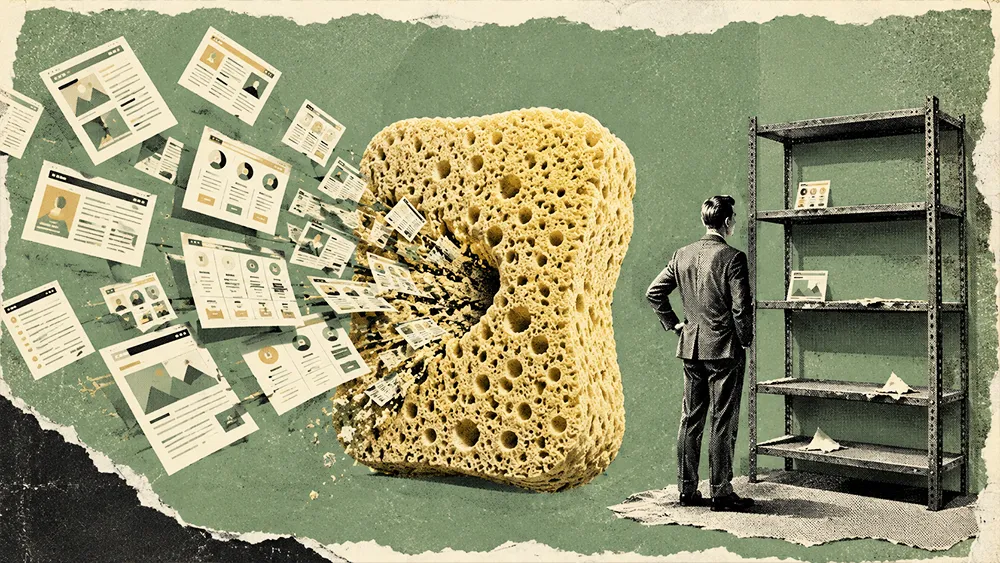
Brand has become more important than ever because it's a proxy for the trust and emotional connection that people have with your product or your company.

For as long as B2B marketing has existed online, websites have served dual purposes of educating and engaging. Buyers came for the education from product pages, blog posts, pricing, and competitive comparisons, and marketers designed conversion paths to capture them once they arrived. AI has flipped that equation. AI-powered search results, LLM summaries, and answer engines now deliver the educational layer directly, often without a click-through. The information still lives on the website and needs to be there to train the models, but the reason a human visits is shifting from "I need to learn" to "I want to interact." The websites that recognize this shift are redesigning around engagement as the entry point rather than the conversion step.
Kathleen Booth is VP of Marketing at Sequel.io and a veteran B2B marketer. Her resume includes marketing leadership roles at Pavilion, Attila Security, and Quintain Marketing, and she writes the Substack newsletter Code Meets Creed helping brands incorporate AI into growth strategy. Her experience rebuilding websites while the rules of B2B marketing shift around her has sharpened a conviction that the emotional dimension of a brand's online presence is becoming its most defensible asset.
"Brand has become more important than ever because it's a proxy for the trust and emotional connection that people have with your product or your company," Booth says. That conviction shapes every strategic decision about how a website should function in a market where education alone no longer earns a visit.
Engagement first, education second
Booth's framework is simple. If AI and search engines are satisfying the buyer's need for information before they ever reach your site, then the website's primary job is no longer to inform. It's to create reasons to show up. "The model is flipping," she says. "If you want humans to still come to your site, you have to give them a reason to interact." That interaction can take many forms, like live video events and webinars hosted on the site rather than on third-party platforms, AI-powered digital avatars that can hold real-time conversations with visitors, and ROI calculators or assessment tools that create personalized value. The common thread is that each one offers something a search result or LLM summary cannot: a live, responsive, choose-your-own-adventure experience.
Booth is particularly bullish on live video as an engagement signal. "If somebody shows up to a live event and gives you 45 minutes of their time, that is a really strong, intense signal. Our time today is the most precious thing we have. So what are you going to do with that attention? How are you going to make it engaging and interactive while you have them?"
Websites still matter for things AI can't replace
As for the trite narrative that websites are dead, Booth pushes back firmly. Websites, she says, remain essential for three reasons that AI cannot displace.
First, they're the source material that LLMs and search engines use to generate answers. Without a well-structured, educational website, those platforms have nothing to train on. Second, they are the only environment where a brand fully controls its own narrative. AI summaries can hallucinate, misrepresent, or decontextualize. The website is where buyers go to verify. Third, and most importantly in Booth's view, websites deliver emotional trust that AI cannot. She likens it to the experience of visiting college campuses. "You walk onto campuses and in most cases you just know or you don't," she explains. "It's this visceral feeling, and people still experience that with companies and their brands. You come to a website and you're either interested or you know immediately it's not for you."
In Booth's view, that feeling, formed by the combination of visual design, messaging tone, layout, and brand personality, is what closes the emotional half of the buying decision. "Forever humans have bought with two halves of their brain. There's the logical side and the emotional side. AI does a really good job of solving for the logical side. It doesn't solve for the emotional side." She acknowledges AI's capability to make recommendations and shortlists, but in B2B, where buyers stake their reputations and careers on purchase decisions, she doesn't see humans stepping out of the process anytime soon.
Building the intelligent website
Booth's team is actively rebuilding her company's site around these principles. All live and on-demand video content lives on the website rather than on third-party platforms. The visual brand is being redesigned to signal AI-native challenger status in a market dominated by legacy competitors. The team is exploring digital AI avatars and interactive product tours to give visitors multiple paths for self-directed exploration.
The most forward-looking feature Booth describes is real-time website personalization driven by webinar behavior. When a live event attendee answers a poll question, asks a question in chat, or reveals something about their role or needs, AI identifies which predetermined buyer segment they fall into and immediately refreshes the content surrounding the webinar player to match. A CMO might see a case study and a link to book a meeting with a specific sales rep. A practitioner might see a product tour and an ROI calculator. "It's about orchestrating a very personalized customer journey based on real-time actions a person is taking inside a live event," Booth shares. "While you have their attention on that website page, you're showing them their next step as they reveal more about themselves."
Her advice to peers is to stop investing in systems that surface data without acting on it. The real bottleneck she sees most brands struggle with is execution. "Marketers download a CSV full of leads and then have to create the campaign, put together the emails, create the ads. Often it doesn't happen, or by the time it does, the moment has passed." In her view, the future belongs to agentic systems that take immediate, on-brand action based on the signals the website is already capturing. "The real promise is investing in systems that will ensure the action is happening immediately and is done well, on brand, and driven by AI."



.webp)