
All articles
Construction's Hidden AI Liability Is The Authority Gap Behind Polished Outputs
Senior infrastructure executive Ihab Osman explains why AI governance in construction must center on provenance, authority, and a named human of record for every artifact that affects cost or scope.
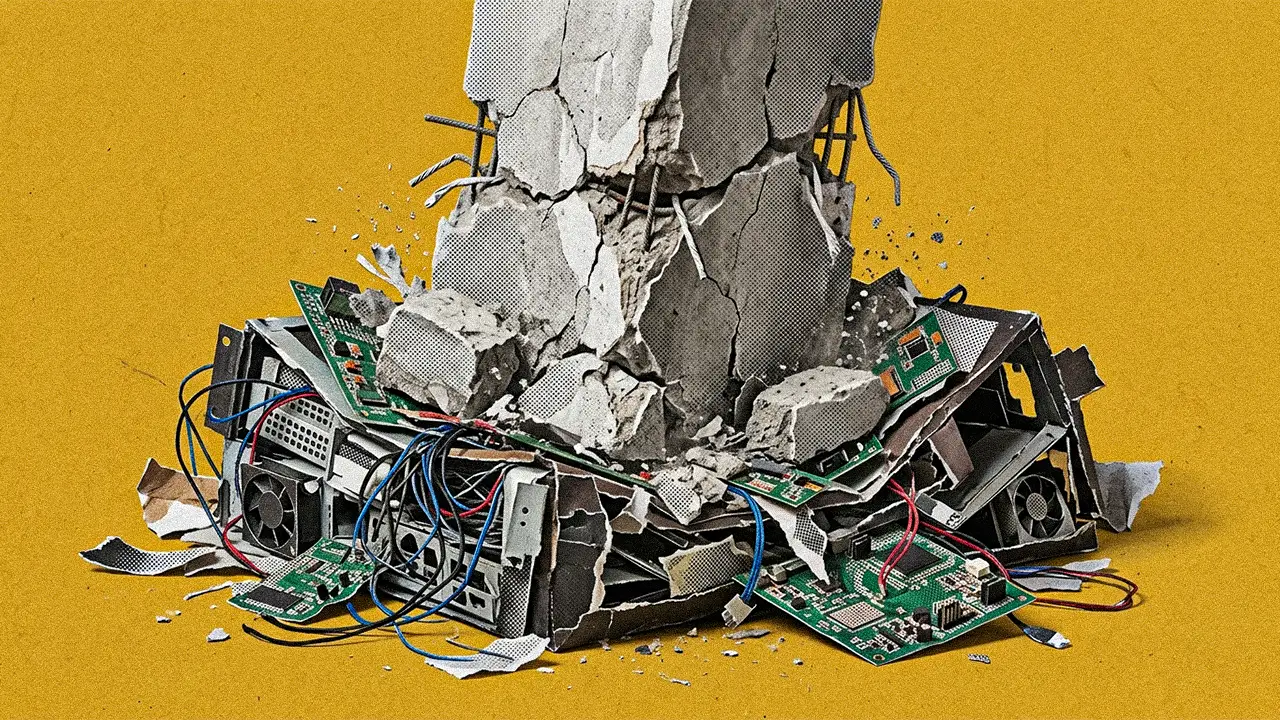
In construction, liability often forms around what people relied on, not only around what was formally approved.

Artificial intelligence is rapidly becoming part of the construction industry's day-to-day workflow. Teams are using it to summarize meetings, compare design options, organize procurement information, draft reports, and generate documentation in minutes instead of hours. The productivity gains are undeniable, but they come with emerging risks.
We spoke with Ihab Osman, a senior executive specializing in mission-critical infrastructure. He says the industry's greatest AI challenge is that AI is creating polished, authoritative-looking documents faster than the governance processes designed to validate them.
"The deeper problem is speed asymmetry. Construction governance was built around human-speed processes," Osman says. For decades, drawings, meeting minutes, estimates, procurement recommendations, and design narratives naturally moved through multiple layers of review. That friction, while sometimes frustrating, also created opportunities to verify assumptions, clarify intent, and establish accountability before decisions became part of the project record. AI removes much of that friction without automatically replacing the controls.
The problem isn't errors, but reliance
Much of the public conversation around AI governance has focused on hallucinations and factual inaccuracies. Osman believes that's the wrong lens for construction. "I would frame this less as an 'AI error' problem and more as a reliance problem," he explains. "In construction, liability often forms around what people relied on, not only around what was formally approved."
It's a subtle but important distinction. An AI-generated workshop summary or decision matrix may carry a disclaimer stating it is "for discussion only." Yet once that document is circulated, referenced in email chains, copied into meeting minutes, or used during procurement discussions, people begin relying on it. Over time, it can become embedded in the project's documentation regardless of whether anyone formally approved it.
"The issue is not simply whether the AI output was correct. The issue is who relied on it, who had the authority to approve it, who reviewed it, who incorporated it into the record, and whether downstream subcontractors and other parties reasonably treated it as a fait accompli," Osman explains. The resulting legal and commercial exposure may have little to do with whether AI generated the content in the first place.
When drafts look like decisions
One of AI's greatest strengths is producing polished outputs almost instantly. That may also be one of its greatest governance risks. "A polished AI artifact can look more mature than the underlying thinking actually was," Osman says. A brainstorming session can become a clean action tracker. An unresolved workshop can become a structured decision matrix. A rough discussion can suddenly resemble an agreed-upon plan. The formatting signals confidence even when the underlying conversation remains tentative. "The downstream reader may see a conclusion where the attendees still had uncertainties."
As those documents circulate, they can gradually acquire authority simply because they appear complete. That's particularly significant in construction, where documentation often becomes evidence long after it was originally created.
Today's meeting notes could become tomorrow's claims
Osman doesn't expect a wave of lawsuits labeled as AI claims. Instead, he foresees AI gradually becoming part of conventional construction disputes. "I do not think the first wave of disputes will be categorized as 'AI claims. More likely, AI will sit inside ordinary construction disputes: variations, delay claims, scope disputes, design-intent arguments, coordination failures, and approval disputes."
The disagreement won't necessarily center on whether AI was used. Instead, parties may argue over whether a summary reflected an agreed decision, whether an action item represented an approved direction, or whether a generated comparison influenced procurement or design choices before formal authorization occurred. "The AI element will become part of the evidentiary trail."
Construction disputes also tend to unfold slowly. "Construction claims often detonate late. Too late sometimes," Osman notes. "A bad assumption can sit inside a project for years before it becomes commercial damage." By the time questions arise, an AI-generated document may simply appear to be another project record unless someone investigates how it was created, reviewed, and ultimately approved.
Construction faces different risks than software
AI governance discussions often borrow lessons from the software industry, but it's an imperfect comparison. "In software, many errors can be patched, rolled back, or isolated," Osman points out. "In the physical world, a bad assumption can become equipment or material selection, space adjustment, utility capacity request, untested control logic, commissioning with out-of-sequence elements, increased staffing and operating cost, or contractual liability exposure." Once construction decisions translate into physical infrastructure, correcting them becomes exponentially more expensive.
The consequences can extend well beyond project completion, affecting operations and maintenance for decades. That makes governance fundamentally different from simply validating AI outputs for accuracy.
Governance must focus on provenance and authority
Rather than banning AI or slowing adoption, Osman believes organizations need governance models that keep pace with the technology. For construction, that starts with understanding the provenance of every AI-assisted artifact. "Every AI-assisted artifact that may affect scope, cost, schedule, design, procurement, safety, commissioning, operations, or contractual interpretation should have a clear epistemic lineage and status."
In practical terms, teams should know whether a document represents a meeting note, a draft analysis, a recommendation, a formal deliverable, or an approved decision record. Equally important is identifying the human responsible for it. Projects should be able to answer straightforward questions, like 'who reviewed the document?', 'what source information was used?', 'who had authority to approve it?' and 'who accepted responsibility for relying on it?'
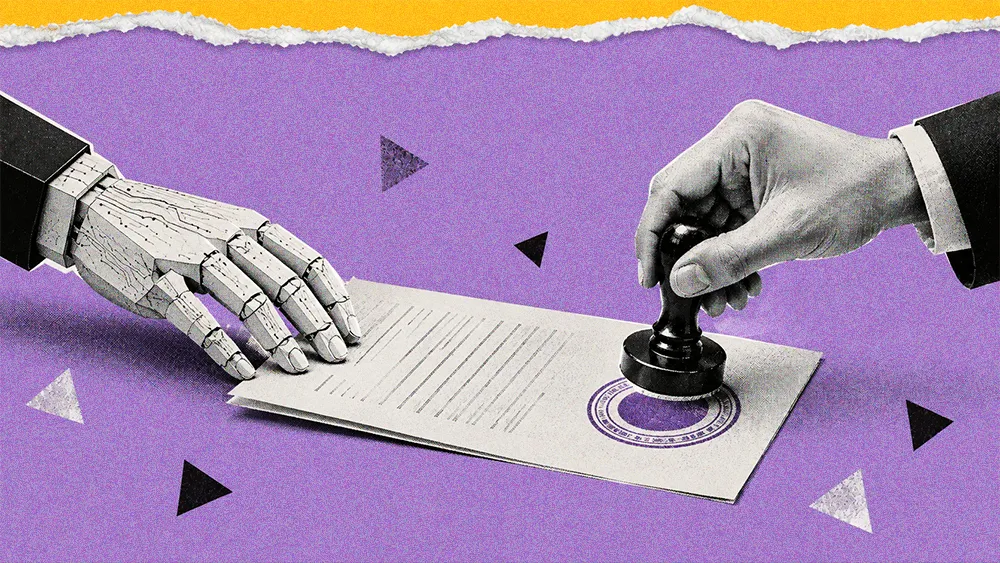
According to Osman, construction governance isn't simply about adding AI language to contracts. "It's also workflow control," he says. Organizations need clearer boundaries separating information from recommendations, recommendations from instructions, and instructions from formal approvals. His advice is simple. "No AI-assisted artifact should be used to carry decision weight unless a named accountable person has reviewed it, validated it and, more importantly, accepted responsibility for its use."
AI is already embedded in construction workflows. The question is no longer whether organizations will use it, but whether governance will evolve quickly enough to keep pace. In Osman's view, the industry still has an opportunity to address the issue before it becomes a recognizable category of litigation. "I see it as an emerging document-control failure mode," he says. "That's early enough to prevent if the industry treats it as a provenance and authority problem now, rather than waiting for the first large dispute to force the issue into a new category."
Ultimately, he asserts, organizations should stop asking only whether AI created a document. "The better question is: 'What authority approved this artifact?' If the answer is unclear, the project has already created risk."

.webp)