
All articles
AI-Generated Inquiries Are Flooding CRMs, and Sales Teams Can't Tell Real Buyers From Bots
Your pipeline says demand is up. Your reps say nothing is converting. Both might be telling the truth.

A year ago, the concern was that AI would replace the sales rep. Turns out, that was the wrong focus. The more immediate problem is that AI is replacing the buyer, or at least impersonating one well enough to waste hours of selling time before anyone figures out what happened.
Automated traffic now accounts for more than 53% of all web traffic, up from 51% the year before and crossing the majority threshold for the second consecutive year. Human activity has dropped to 47% and continues falling. The old binary of "bot or not" no longer holds, because legitimate AI agents browsing on behalf of real buyers are now behaviorally indistinguishable from malicious ones scraping data or stuffing forms.
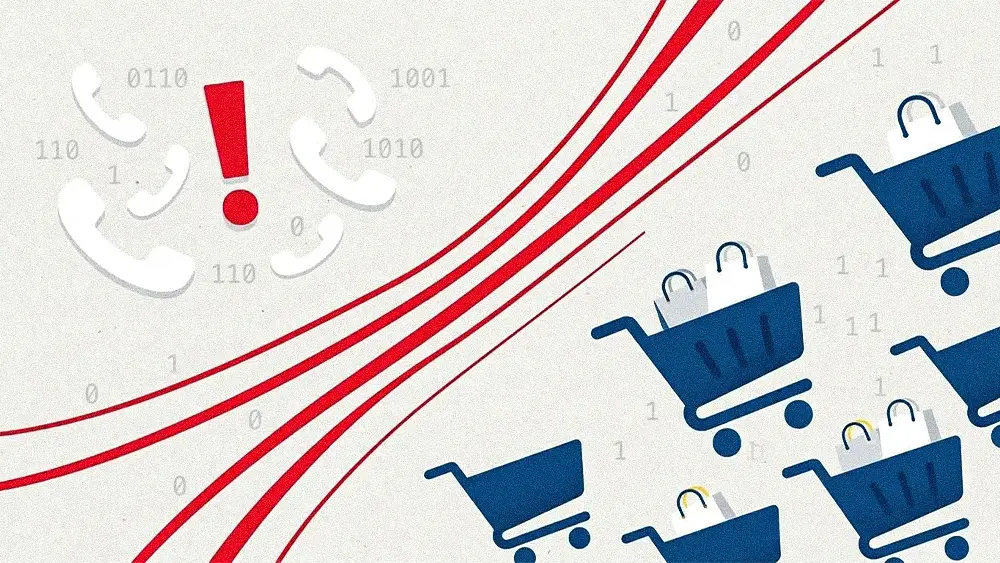
For revenue teams, that distinction matters enormously. What looks like a buyer filling out a demo request form might be a procurement AI agent running an automated vendor scan. What registers as a spike in content downloads might be an LLM training crawler. What scores as a high-intent lead in your CRM might be a bot that navigated your site with human-like variability, filled out every field correctly, and will never respond to a follow-up call.
Fraught with fraud
The traditional bot problem was easy to spot. Fake names, disposable email addresses, forms completed in under three seconds. Those still exist, but the newer generation of automated traffic is harder to catch.
AI-generated personas now blend stolen data with synthetic behavioral patterns that mimic real browsing. They simulate mouse movements, vary typing speed, and navigate conversion paths the way a human prospect would. Some use real contact information scraped from breaches or purchased lists, which means the lead passes every validation check your form runs. The name is real. The email is real. The person behind the submission is not.
The damage compounds in ways that don't surface in any single report. Fake leads inflate conversion metrics, which causes marketing to double down on the channels producing the fraudulent traffic. CRM data quality degrades, which corrupts the scoring models sales relies on to prioritize real opportunities. Reps burn hours calling numbers that ring out or emailing contacts who never requested anything, and that time doesn't come back. Email deliverability suffers when enough of those follow-ups bounce, triggering spam filters and eroding domain reputation. Each problem feeds the next, and the aggregate effect looks like a sales execution issue on a dashboard when it's actually a data contamination issue underneath.
The buyer's AI is part of the problem too
There's a second source of noise that doesn't involve fraud at all, and it may be harder to manage because the intent behind it is real.
Gartner projects that by 2028, 90% of B2B buying will be AI-agent intermediated, pushing more than $15 trillion of B2B spend through agent exchanges. Forrester found that 61% of purchase influencers say their organization has or will use a private generative AI engine to support purchasing. Buyers are already using ChatGPT, Perplexity, and Gemini to research vendors, compare options, and build shortlists before they ever talk to a rep.
That research generates traffic. An AI assistant evaluating vendors on behalf of a human buyer might visit five thousand URLs where the human would have visited five. It might download whitepapers, interact with pricing pages, and trigger intent signals across your tech stack. All of that activity registers in your CRM as interest, and much of it may never convert to a conversation because the AI already decided you didn't make the shortlist.
Cloudflare's CEO described this asymmetry at SXSW: a human shopping for a product visits a handful of sites, while an agent performing the same task visits thousands. Every one of those visits looks like a prospect to your analytics. Your pipeline metrics say demand is up while your reps say nothing is converting.
This is a pipeline quality story, not a security story
Most of the conversation about bot traffic happens in security and ad fraud circles. For revenue leaders, the framing needs to be different. This is a pipeline quality problem that directly affects forecast accuracy, rep productivity, and the cost of acquiring real opportunities.
When a meaningful share of CRM activity comes from sources that will never buy, every downstream metric gets distorted. Pipeline coverage ratios look healthier than they are. Lead-to-opportunity conversion rates drop in ways that look like a sales execution problem but are actually a data contamination problem. Reps burn hours chasing contacts who don't exist or were never human in the first place, and that time doesn't come back.
The companies catching this early are treating lead validation as a revenue operations function, not an IT function. That means real-time behavioral verification at the point of form submission, not after the lead is already in the CRM. It means auditing intent data sources for signal quality rather than volume. And it means building qualification workflows that can separate a real buyer's research from an AI agent's automated sweep.
The phone call is becoming a verification layer
There's an irony worth sitting with. As digital channels get flooded with AI-generated noise, the phone call is becoming one of the few reliable ways to confirm that a human being with buying authority actually wants to talk.
A bot can fill out a form. It can download a whitepaper. It can trigger intent signals across third-party data providers. It can navigate a website with enough behavioral fidelity to fool most detection systems. What it cannot do, at least not yet, is hold a live sales conversation with a real SDR who asks unscripted follow-up questions and listens for context that doesn't fit a template.
That gives phone-first outbound a quality advantage that has nothing to do with nostalgia and everything to do with signal integrity. When an SDR gets a prospect on the phone, the qualification is happening in real time. The lead is verified as human by the act of having the conversation. The information gathered is first-party, uncontaminated by synthetic data, and immediately actionable. In a pipeline increasingly polluted by automated noise, that verification has value that didn't exist three years ago.
What revenue leaders should do now
Audit your CRM for contamination before it distorts your next forecast. Look at lead-to-opportunity conversion rates by source. If specific channels show high volume and collapsing conversion, the issue may not be messaging or targeting. It may be that a significant share of those leads were never real to begin with.
Push your marketing team to measure intent data quality, not just intent data volume. Third-party intent signals are useful when they reflect genuine buyer research. They're harmful when they reflect AI crawlers generating false positives across your scoring model.
Move form-based lead validation upstream. Every fake lead that enters the CRM costs downstream time and money: the rep who follows up, the email that bounces, the forecast that gets inflated. Catching it at the point of entry is cheaper than cleaning it up later.
And reconsider where the phone sits in your qualification process. In a world where digital signals are increasingly unreliable, a live conversation with a human prospect is becoming the highest-fidelity data point in the funnel. The teams that build their pipeline around that signal are going to report cleaner numbers and close more business than the ones still chasing every form fill that hits the CRM.




.webp)