
All articles
Why Your Event Strategy Should Optimize for Buying Committees, Not Lead Volume
Revefi's Girish Bhat argues cost per lead misses what enterprise events actually buy: access to the buying committees that move deals. His method starts six months out.
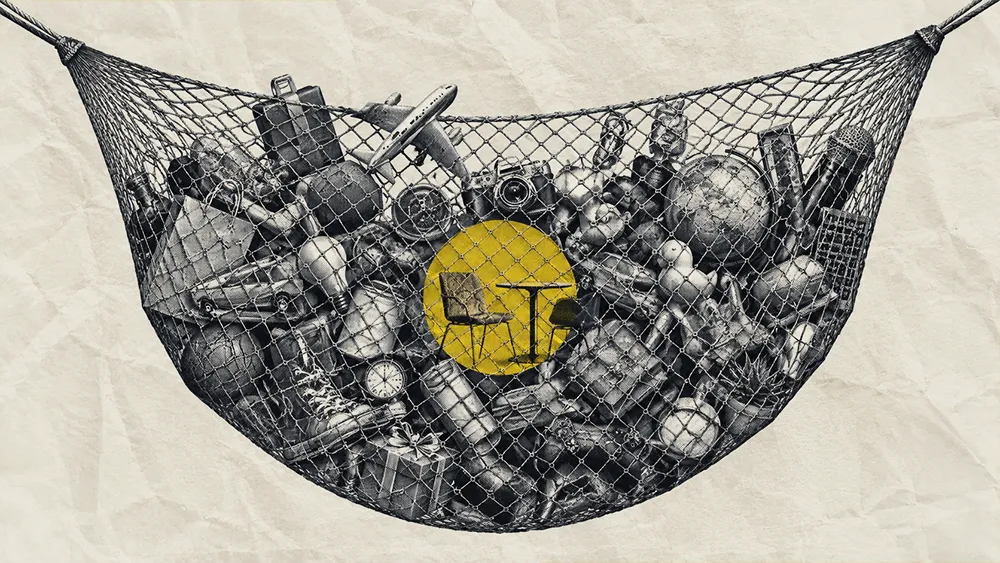
Lead is an overloaded term. It's not a scan. Is it a relevant contact, or a company or an account that's relevant to your business? That's how I look at it.
Every event budget eventually meets the same spreadsheet. Total spend on top, badge scans on the bottom, and a cost-per-lead figure in between that decides whether the show gets renewed. It's clean, it's comparable across events, and it survives a finance review. It also, according to Girish Bhat, answers the wrong question. "Often people say cost per lead," he says. "That's a very wrong metric."
Girish Bhat is SVP of Global Marketing and RevOps at Revefi, and he's spent more than twenty years building GTM engines across enterprise data, cybersecurity, and observability, including a stretch at Splunk through multiple IPOs. The problem comes down to a word everyone uses and almost nobody defines. "Lead is an overloaded term," Bhat says. "It's not a scan. Is it a relevant contact, or a company or an account that's relevant to your business? That's how I look at it." That definition shapes how he plans his events, starting six months out.
What a scan is actually worth
An event organizer hands you a number at the end of the show. Eight hundred scans, five thousand scans, every one of them counted as a lead. "Most of them tend to be, how should I delicately put it, garbage," Bhat says. He runs through the scans that aren't useful to his team: swag hunters, job seekers, competitors, consultants and partners who came to sell to him rather than buy from him. "A raw scan is meaningless," he says.
The damage compounds when that count becomes a denominator. Divide a real dollar figure by a number that lumps buyers in with swag hunters, and you get a ratio that looks rigorous and tells you nothing. Bhat would rather track something harder to game, whether the contact and the account are actually relevant to the business, a count that comes out smaller and far more honest.
Bhat's definition of a lead comes from how he sees the event itself. He treats it as one touch in a longer buying decision, and in enterprise that decision never runs through a single person. "In enterprise there's no single buyer, there is a buying committee," he says. "It's rarely a one-person committee. You could have 5, 10, 20 people." Gartner describes a nonlinear B2B buying journey in which a cross-functional group moves through different buying jobs before reaching consensus. That's the buying committee dynamic Bhat plans around, and it's why the scarce asset is access: an event can put a meaningful slice of a buying committee in one building at one time. That kind of access is much harder to manufacture than a list of contacts, so Bhat treats the booth as a meeting venue he's arranged in advance rather than a place to wait and see who wanders up.
Six months before anyone scans anything
Bhat starts early. "I'm already looking at events for 2027, not just 2026," he says. "I look at events quite early, at least six months or longer." He wants events in his category that draw a mix of execs, users, and influencers, the roles that can make up a buying committee. A show that fails that test is likely to produce exactly the kind of badge volume that makes cost per lead look deceptively attractive.
Once an event clears the filter, the planning gets more specific around 60 days out. Positioning, messaging, pre-event emails, and a team assigned by role. "I have a combination of SDRs, AEs, exec, and myself," Bhat says, and the multi-threading runs in two directions at once. "It's also about having different folks on the team having touch points with the prospect or existing customer." He and his CEO take the financial and roadmap conversations. The SDRs run prospecting and demos, with one hard boundary. Reps don't speak to future roadmap. "In tech, things change," Bhat says. "What we say today and what we actually end up doing in three months may be different." An SDR might know what he'd say, "but they're not permitted to say that." Before the doors open, there's a dashboard tracking meetings and pipeline, updated live through the show.
Follow-up starts before the booth closes
Bhat starts follow-up during the event. "Every day I send a note," he says. "If I meet folks in my booth or outside the booth, I send a thank-you note." His reasoning is that attendees get buried. "As humans we get bombarded with thousands of messages," he says, which is why he wants the interaction to land before the inbox fills. When the show ends, follow-up continues across marketing, SDRs, AEs, and founders.
Bhat runs all of this on a common CRM, no specialized tooling behind it. "I'm not big into using tools for the sake of tools," he says. He's been tracing customers back to event touchpoints since before generative AI existed. "This is even before GenAI. You don't really need GenAI for that, but GenAI makes it easier." His model starts with the outcome. "We start with, we are doing these events, what's the outcome we are trying to get?" he says. He watches how many demos his team gave, how many conversations they had, how much pipeline moved, and which deals trace to an event. Sometimes the target is awareness, and he sets the measurement accordingly. "I'm not going to expect any pipeline. If it happens, it's a positive upside."
Bhat says the approach has paid off. He points to a recent close with one of the largest insurance companies in the market and says he can show every touch that led to it. "Events play a critical role with the buying committee," he says. "Almost every single customer we have had, I can trace back to an event of some sort."
"If you pick your events wrongly, and if you don't have a plan of what you're going to get out of it, sure, events can be dead," Bhat says. Knowing which accounts you want in the room, putting the right people around them, and starting follow-up before the show is over is what turns the event into a pipeline engine. The handful of people from the right buying committee was always the count that mattered, regardless of what the badge total said.


.webp)