
All articles
AI SDR vs. Human SDR: The Teams Booking Real Pipeline Use AI for Research and People for the Conversation
What autonomous AI SDRs can and can't do, and how revenue leaders are dividing the work
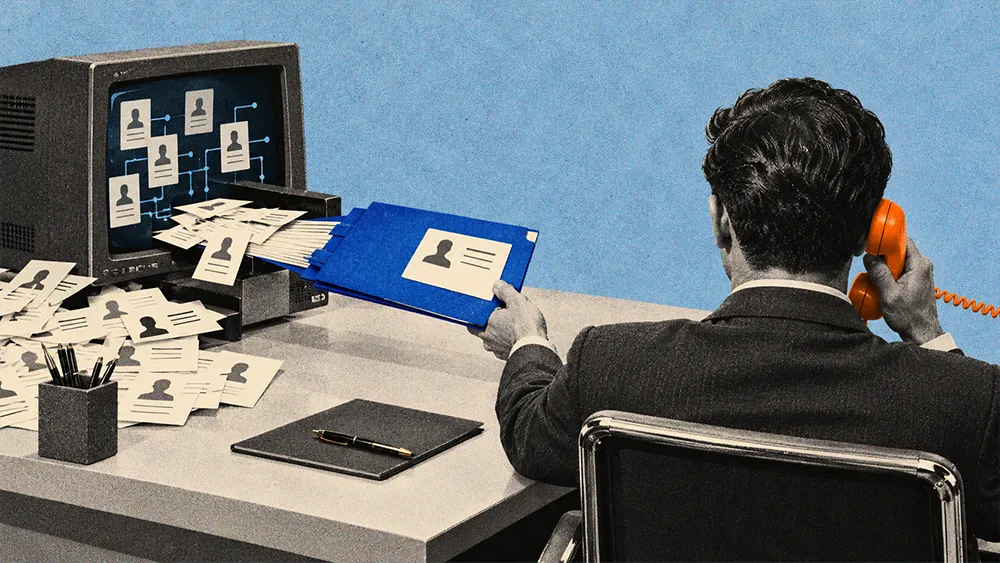
AI SDRs can research accounts, enrich contacts and draft outreach far faster than any person, but fully autonomous AI outbound has struggled to produce meetings that turn into revenue. The teams getting the strongest results use AI to prepare reps and prioritize accounts, and keep people responsible for live conversations, qualification and objection handling.
Two years ago, AI SDR vendors promised an agent that could do the work of a sales development rep at a fraction of the cost, around the clock, with no ramp time and no turnover. Venture money followed, and dozens of companies bought in.
The Revenue Wire reported in July that annual churn among autonomous AI SDR products has been estimated at 50% to 70%, as buyers walked away once early contracts came up for renewal. In the wider agentic AI market, Gartner expects more than 40% of agentic AI projects to be canceled by the end of 2027, citing rising costs, unclear business value and weak risk controls.
For most revenue leaders, the useful question now is how to split sales development work between software and people. Aurelien Mottier, President of memoryBlue, thinks the answer depends on which parts of the job involve talking to a buyer. "There are so many things that can automate the salesperson, but what can't be automated is having great conversations," he told The Revenue Wire.
What AI SDRs do well
Much of an SDR's week goes to work that never involves a buyer, like building lists, finding contact details, researching accounts, checking for buying signals, writing first drafts and logging activity. AI handles that work quickly and at scale. Bain Capital Ventures, after talking with revenue leaders across its portfolio, concluded that AI should handle routing, enrichment and scheduling, and noted that reps have historically spent an hour or more each day just preparing who they'll call and what they'll say.
Cognism's 2026 analysis of more than 200,000 cold calls found that teams using AI-driven data tools booked meetings at a 6.7% success rate, close to three times the 2.3% industry benchmark. In those programs, AI decided who to call and when, and a person still made the call.
Michelle Galatis, memoryBlue's Global Head of Talent Development, uses AI to simulate prospect conversations before new hires dial a live list. She told The Revenue Wire that with virtual role play, "reps can get as many practice repetitions as they need."
The tasks where AI tends to help most include:
Account and contact research, including firmographics, org charts and recent company news
Data enrichment and list hygiene
Signal detection, such as hiring, funding, technology changes or website activity
First drafts of emails and call talking points
Meeting scheduling, reply routing and CRM updates
Call practice and coaching between live conversations
Where human SDRs still win
The work that produces revenue happens in live conversations, and that's where autonomous AI has fallen short. Buyers have become quick to spot automated outreach, and inboxes are full of it. Glenn Haertel, memoryBlue's Chief Revenue Officer, sees the problem from both sides as a seller and a buyer. "Outreach from an AI engine misses the mark most of the time. It's not personal, it's too structured, and it's bothersome," he said. "When that's your first impression, you've already lost the chance to engage."
The phone has become more valuable as other channels fill with automated messages. At memoryBlue, 85% of booked meetings come directly from live phone conversations, rather than from email or LinkedIn. Bain Capital Ventures heard a similar story from its portfolio, where one SDR said cold calls were the channel working best for his team.
Human reps also handle the parts of a sales conversation that don't follow a script. They notice hesitation, adjust their pitch in the middle of a sentence, deal with objections they haven't heard before and decide when to back off. In larger deals, they help buying committees reach agreement. Mottier describes that work as getting stakeholders who disagree into the same room and helping them weigh the trade-offs, which he says "requires deep emotional intelligence."
There's a talent cost to automating the role, as well. Many account executives and sales leaders start as SDRs, and Bain Capital Ventures points out that promoting a strong BDR often cuts AE ramp time roughly in half compared with hiring externally. A company that replaces its SDRs with software also loses its pipeline of future closers. As the firm put it, "AI has raised the floor for sales development but not the ceiling."
How hybrid teams divide the work
The teams getting results from AI have mostly moved it behind the rep, into research and preparation, instead of putting it in front of the buyer. Reps spend less time building lists and drafting emails and more time on the phone with prospects that software has already found and researched.
A rep who uses AI to understand a prospect's business, recent news and likely priorities can open with a specific reason for calling, which is what earns a few minutes of a busy buyer's attention. "Leverage AI to be smart, but do your work," Haertel said. "The sellers who win are the ones who prepare, follow up, and put in the effort, because there's no substitute for human connection."
Mottier has written that AI works well for email automation, lead scoring and data enrichment but can't replace prospecting skill or real-time objection handling, and that over-reliance on it produces robotic outreach and lost pipeline. memoryBlue has built its own model around that split, with AI-informed research and outreach supporting reps who hold live conversations. The company has also partnered with Mindtickle to use AI-driven coaching to bring new SDRs up to speed faster.
A practical way to divide the work:
AI owns list building, enrichment, signal monitoring, account research, draft messaging, scheduling and CRM logging.
Reps own live calls, reply handling, qualification, objection handling, multi-threading into buying committees and the decision about whether a message should be sent at all.
Managers own reviewing AI output, coaching from call recordings and checking that meetings convert into real opportunities.
How to decide what's right for your team
The right mix depends on what a company sells and to whom, and these questions can help narrow it down.
How complex is the sale? High-value products sold to buying committees depend on discovery and relationship work that AI handles poorly. Lower-value, transactional products can tolerate more automation.
Which channels do your buyers answer? If meetings come mostly from phone conversations, AI should support callers rather than replace them.
How will you protect your domain? Volume-driven AI email can damage sender reputation quickly, and recovery is slow.
What are you measuring? Track meeting-to-opportunity conversion and pipeline created instead of counting meetings booked or emails sent.
Who reviews the AI's work? Someone needs to check what goes out under your company's name.
Where will your future AEs come from? If SDRs are your main source of closing talent, removing the role has a long-term cost.
Companies evaluating AI SDR vendors should ask for references from customers who renewed after their first contract term. Companies working with an outsourced sales development partner should ask how the provider uses AI behind its reps and how much of its pipeline comes from live conversations. memoryBlue's guidance on when to outsource go-to-market work covers similar ground for teams weighing the build-or-buy question at the same time.
Frequently asked questions
Will AI replace SDRs?
Not in most B2B sales organizations. Fully autonomous AI SDR products have seen high churn, and the teams getting the best results use AI to support human reps rather than replace them. AI takes over research and administrative work, while people handle live conversations and qualification.
What is the difference between an AI SDR and a human SDR?
An AI SDR is software that automates prospecting tasks such as research, list building, email drafting and scheduling, and in some cases sends outreach on its own. A human SDR holds live conversations with prospects, qualifies interest, handles objections and books meetings for account executives.
What is a hybrid SDR model?
A hybrid model uses AI for research, enrichment, signal detection and first drafts, while human reps handle calls, replies, qualification and relationship building. Managers review AI output and coach reps using call data.
Is cold calling still effective with AI?
Yes. Cognism's 2026 data showed teams using AI-driven targeting booking meetings at 6.7% of calls, nearly three times the industry average. At memoryBlue, 85% of booked meetings come from live phone conversations.
What tasks should AI handle in sales development?
Account research, contact enrichment, list hygiene, buying signal detection, draft messaging, meeting scheduling, CRM updates and call practice. Live conversations and qualification are best left to people.

.webp)