
All articles
The New GTM Divide Isn't Whether You Bought AI, It's Whether AI Runs the Workflow or Decorates It
The companies pulling ahead aren’t the ones with the most AI tools. They’re the ones redesigning revenue workflows so AI drives action, reclaims seller time, and moves the metrics that matter.

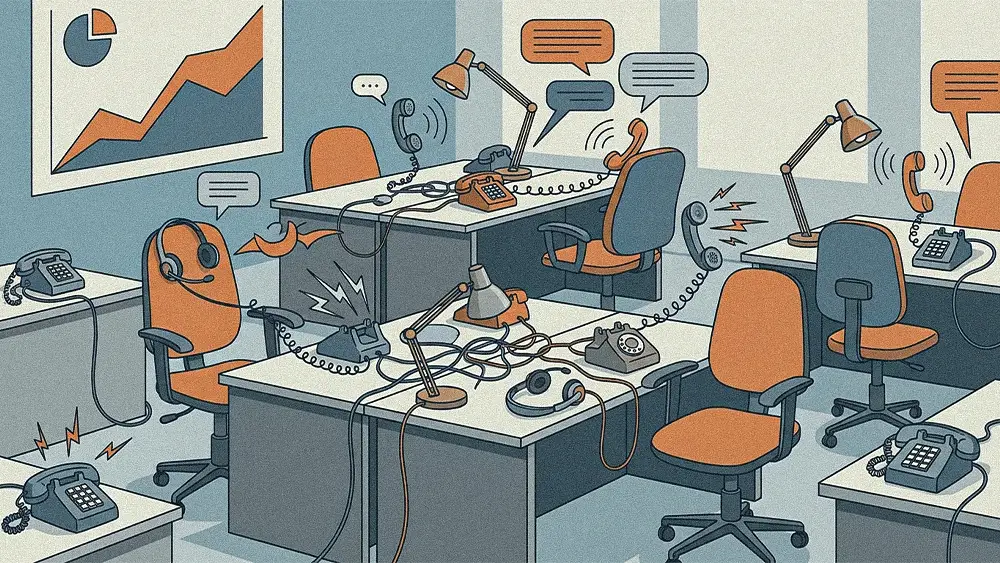
Two revenue organizations can hold identical AI licenses, sit in identical markets, and post wildly different numbers. One is compounding productivity gains quarter after quarter. The other has a stack full of copilots, a slide about innovation, and the same quota attainment it had two years ago. The difference between them has stopped being adoption. Nearly everyone has adopted. The difference is architecture: whether AI actually runs part of the revenue workflow or just sits on top of it looking busy.
The research coming out of both major analyst houses and the largest revenue datasets now points at the same divide. Gartner's survey of chief sales officers, presented at its CSO & Sales Leader Conference, found that organizations giving sellers AI-enabled next best actions are 2.6 times more likely to achieve commercial growth than those that do not. Gong's analysis of 7.1 million sales opportunities found that companies embedding AI into their core go-to-market strategy are 65% more likely to increase win rates than competitors treating it as optional, and that teams using AI regularly generate 77% more revenue per rep. None of those gaps come from owning software. They come from where the software sits in the process.
The decoration trap
The clearest evidence that most organizations are on the wrong side of the divide is a statistic that should bother every CRO: Gartner found AI tools are saving sellers an average of 4.8 hours per week, yet 72% of sales organizations report low reinvestment of that recovered time. The hours are real. They are simply leaking out of the building, absorbed into longer internal meetings, slower response habits, and unmanaged calendars, because nobody redesigned the seller's week around the capacity AI created.
That is what decoration looks like in practice. The tool works, the demo was accurate, the time savings show up in the vendor's QBR deck, and the revenue line does not move because the workflow around the tool never changed. A copilot that drafts an email a rep was already going to write is a convenience. It becomes leverage only when the process itself expects the draft, routes it, measures it, and reallocates the saved hour to a customer conversation.
Greg Hessong, Senior Director Analyst in the Gartner Sales practice, drew the line directly, noting that the most effective sales organizations are "not simply layering AI onto existing ways of working" but rebuilding seller workflows so AI handles execution, recommendations, and orchestration while humans concentrate on the moments where judgment and customer value decide outcomes.
What the workflow side looks like
The organizations pulling ahead share a recognizable pattern. AI is assigned specific stages of the revenue motion with defined inputs and outputs: account research compressed from hours to minutes, signals monitored continuously instead of when someone remembers, next actions recommended inside the tools reps already use, forecasts generated from behavior rather than from optimism. Gartner expects this to become the default fast, predicting that by 2027, 95% of seller research workflows will begin with AI, up from under 20% in 2024.
Just as telling, the workflow-side organizations changed what they measure. Adoption dashboards and license utilization, the favorite metrics of the decoration era, tell you nothing about outcomes. The teams showing up in Gong's 77% figure track revenue per rep, customer-facing hours reclaimed, and cycle time by stage, which are the numbers that reveal whether AI capacity is being converted into pipeline or quietly evaporating.
Practitioners running AI inside live sales motions arrived at the same conclusion from the ground up. memoryBlue, the global sales acceleration firm, structured its AI sales playbook around explicitly mapping where AI belongs in the process and where it does not, which is the workflow mindset in miniature: a deliberate assignment of work, rather than a tool waved vaguely at a team.
Crossing the divide
Moving from decoration to workflow does not start with buying anything. It starts with an honest audit of one revenue process, usually prospecting research or post-call follow-up, asking three questions. Where does AI currently produce output in this process? Does anything downstream depend on that output, or is it optional? And where do the saved hours go? If the answers are "everywhere," "no," and "nobody knows," the organization is decorating.
The fix is unglamorous. Pick one workflow, make the AI output a required input to the next step, assign an owner, and measure the reclaimed time against customer-facing activity. Then repeat. The 2.6x and 65% and 77% gaps in the research were not built by transformation programs. They were built one redesigned workflow at a time, while competitors were still admiring their stack.
The window for treating this as a philosophical debate is closing. When both Gartner and Gong, working from completely different datasets, find the same multiple separating embedded AI from bolted-on AI, the divide is no longer a prediction. It is a scoreboard, and every quarter spent decorating adds to the deficit.




.webp)