
All articles
AI Is Pushing Marketing From Campaign Factory To Customer Intelligence
Noesis' Ricardo Rocha on using AI to turn proprietary customer data into account-level intelligence that helps AEs prioritize targets and unstick deals.
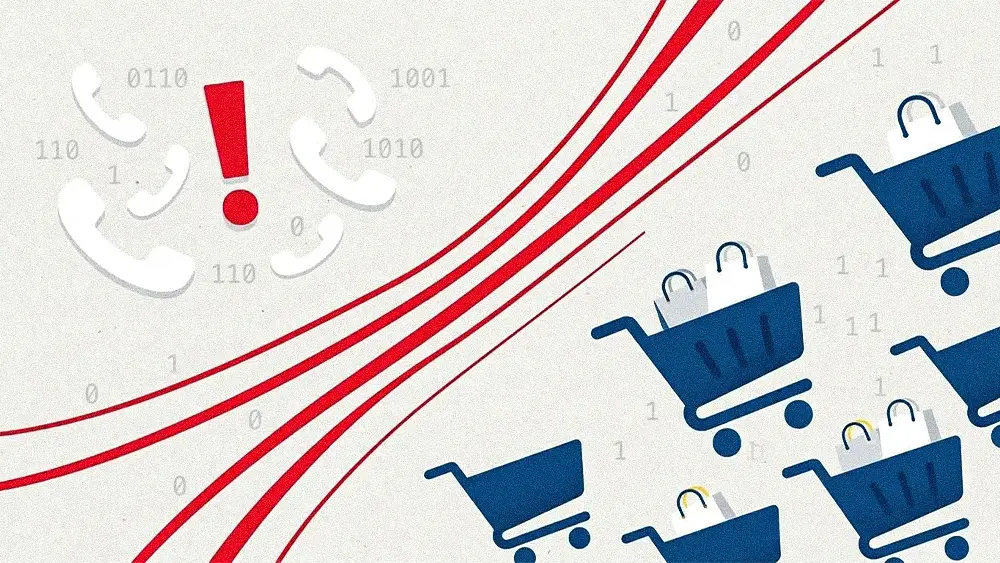
I call it moving from a campaign factory mentality to customer intelligence. Look at marketing as a customer intelligence unit and that puts you in the center of the organization.

On a Monday morning, an AE opens the CRM to a fresh batch of leads from last week's campaigns. Each one is scored, tagged, and routed with an intent signal attached. The batch is bigger than it was a quarter ago because marketing has started using AI to produce campaigns at a pace the team never could before. The handoff underneath keeps the same shape, only larger, and the AE still spends the first hour of the week working out which names deserve a call and which handful of accounts could make the quarter. Elsewhere in the same company sit hundreds of recorded sales calls, a backlog of customer success notes, and a running log of complaints and returns that could help answer that question. That data may be where AI's more consequential role in marketing begins.
Ricardo Rocha is Global Head of Marketing at Noesis, an international technology consulting company operating across eight countries in EMEA, North America and Latin America, and part of Altia Group. Based in the U.S., he brings more than 20 years of experience across sales, go-to-market, and marketing in the IT sector and has worked through the tool sprawl firsthand, juggling overlapping platforms inside his own marketing function. He sees marketing's biggest AI opportunity in the customer data a company already owns.
"I call it moving from a campaign factory mentality to customer intelligence," Ricardo says. "Look at marketing as a customer intelligence unit and that puts you in the center of the organization." In practice, that shift hands an AE a handful of accounts with the evidence behind each one, along with a partner when those deals stall.
Campaign volume hits a ceiling
The first problem is that AI can solve the wrong problem very efficiently. Ricardo doubts that AI's ability to produce marketing cheaply makes that marketing any more useful to the people carrying a number. He places most teams at the second level of AI adoption, where AI lives inside content workflows and the debate centers on hours saved and roles that might disappear. "This discussion is still a lot about productivity," he says, pointing to arguments like "Maybe we don't need designers because now AI will generate all the visuals and all the content we have."
When that productivity turns into more campaigns handed to sales, he expects the returns to thin. "That ultimately will create more noise," he says. "And so it's going to be harder to achieve your goals and to reach out to your audiences." The problem shows up on the sales side as volume without much more clarity about where to spend time. "Instead of having one campaign, I'm running 300 and I'm getting more leads, ultimately that scale will end," Ricardo says. "Doing more campaigns doesn't necessarily mean more leads." Those extra leads land on reps who are already sorting real buyers from AI-generated inquiries flooding CRMs, so each new batch gets a little harder to trust.
Customer intelligence needs connected data
If more output is not the answer, the next question is what marketing should do with all the information the company already has. For Ricardo, the intelligence work starts with a tech stack that has grown crowded. The 2026 edition of the marketing technology landscape counts 15,505 products, with 1,488 added and 1,367 removed over the prior year. "There's a lot of overlaps and most CMOs or marketing leaders and marketing teams are struggling with that," Ricardo says.
AI has multiplied those choices, both inside existing tools and as standalone products. He has watched the pressure play out after a LinkedIn post or a networking event, when a peer CMO mentions a tool he's never heard of. "Am I missing something or am I not doing well?" he says. Before AI can produce account-level intelligence, he says, a company has to connect its systems and establish data governance across the business, well beyond the marketing department. Teams that skip that step tend to run into the same dirty data slowing AI rollouts other revenue organizations have described.
Once those systems connect, AI can work across data marketers rarely examine together, from sales calls and CRM records to customer success notes, returns, complaints, and social listening. "Humans are not able to compile and to process huge amounts of data," Ricardo says. Together, those sources can reveal which problems a product is solving for real customers, and he sees two uses for that evidence. "With that, you can create better content, but also you can create a better strategy for that sales AE to go out to their target accounts," he says.
On the content side, proprietary detail is what separates a company's material from the generic output AI makes easy to produce. "Your own proprietary data is what prevents you from creating AI slop content and generic content," Ricardo says. He calls this "a level three" of AI adoption, though he is still working out what that level looks like. "I'm not there," he says, calling the idea something he's "just reflecting about."
Marketing can help choose the accounts
Ricardo describes marketers working with individual AEs or sales leaders, depending on company size, and starting from the rep's own plan. "What are your targets? Where are your regions? Where are your industries? Where are your accounts?" he says. Marketing already asks those questions, he acknowledges, and AI lets it fold sales call and demo content, along with customer success data, into the answer. "Companies already have much of this information, but it is scattered across systems and there is simply too much of it for people to digest at scale. Sales calls, CRM data, customer stories, customer success interactions," he says. "AI can help connect and synthesize those signals into usable intelligence."
Speaking from inside an IT services business, he keeps the list small and specific. "It's really an ABM approach, set of five accounts, six accounts, seven accounts, something like that," Ricardo says. "It has to be a very close niche because you cannot solve everything for an industry." An account makes the cut when buying signals line up with evidence that the solution already solves the problem that company is having.
Moving stalled deals
Ricardo's model extends past account selection and into live opportunities, where an AE brings stalled deals to marketing and asks for help. "Hey, I have these three deals that are stuck. We already did the discovery, we already did the demo," he says, playing the rep. "How can you guys help me accelerate these deals?"
In that setup, marketing works as what he calls "a business consultant or a biz dev consultant, helping them to reach their accounts and reach their targets in a different way." Ricardo also sees the role raising marketing's standing inside the company. "You can be even more relevant inside the organization, much more strategic," he says. The same data used to pick those five accounts can then help sales work the three deals that stalled, putting some of marketing's most useful work inside opportunities an AE can't get moving.



.webp)