
All articles
Revenue Disappears When Clients Decide AI Could Have Done The Work
PointOne CEO Katon Luaces on the moment a buyer stopped paying for work it believed AI could have done, and what that means for every firm billing by the hour.
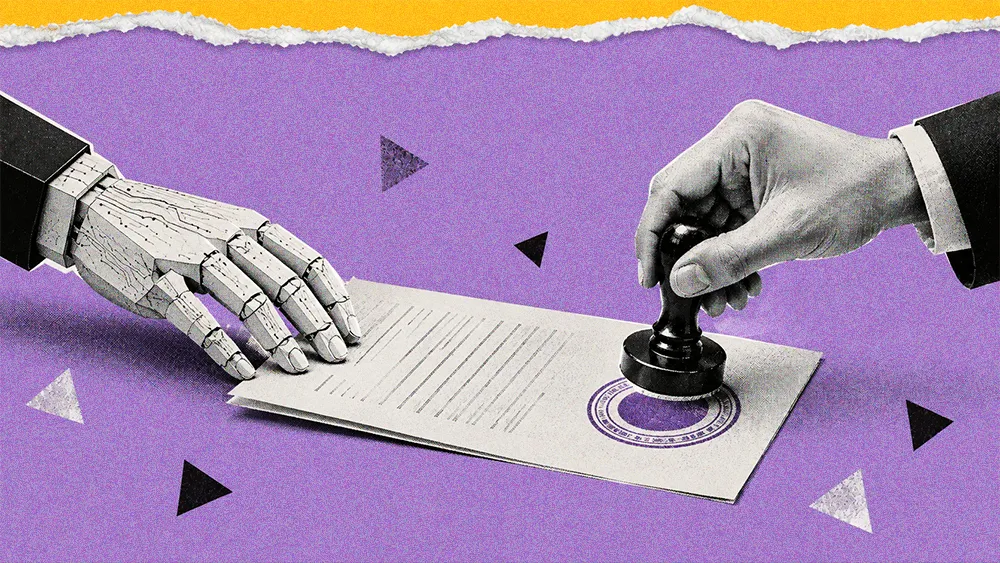
This is a forcing function. Your inability to actually charge for the work that you're doing is going to make sure that you really get on that quickly.

A large insurance company recently told the law firms it works with that it would no longer pay for work it believed AI could have done. The lawyer can still do the work, but the client's willingness to pay for that time is gone. That shift, from valuing the time spent to valuing whether the work needed a person at all, is changing the economics of professional services. Firms are now under pressure to identify what clients may decide is no longer billable.
Katon Luaces, Co-founder and CEO of PointOne, took the call from a firm on the receiving end of that notice. He worked on a legal technology product at Google before joining Applied Intuition, where he built a verification platform for autonomous vehicle systems, and now runs a company that automates time entry, pre-bill review, and billing compliance for law firms.
"We're not going to pay for work that we deem to be possible by AI," Luaces says, recounting the guideline his client received. The insurer works with hundreds of law firms, which means one clause in a billing guideline can change the economics of an entire supplier network. The firm called PointOne because it needed to comply fast.
The guideline arrives before the invoice does
Months before the notice landed, the insurer was telling the market what it wanted through its general counsel's office, ahead of putting anything in writing. "They gave some notice months before. Maybe they didn't say at some point we're not going to pay for it, but they did say, hey, we expect you can. I think this is a forcing function," Luaces says. "Your inability to actually charge for the work that you're doing is going to make sure that you really get on that quickly."
One line in the billing guidelines tracks the whole arc. Last year, the guidelines added a requirement that each time entry indicate whether AI was involved in the work. It started as a restriction, a way for clients to police whether firms were using AI at all. Within two years the same field carried the opposite instruction. First, tell us if you're using it. Then, we expect you to use it. Now, don't bill us for work AI could have done. "This was more a mechanism to restrict the use of AI for client work," Luaces says. "Now it's flipped. Now it's that the clients want to ensure that their law firms are using AI." The mechanism stayed identical while its economic purpose reversed.
Luaces' experience isn't an outlier, and the tension between demanding AI adoption and then using that adoption as leverage surfaced at Legalweek 2026, where panelists described clients who issue guidelines refusing payment for services performed with AI.
Agents that audit other agents
Complying with a rule like this requires the technology to judge the counterfactual behind the rule: could AI have done the work? "We have AI agents that are reasoning about whether or not work, whether or not it was being done by other AI agents, could have been done by AI, and then making sure to either not bill for that or to flag it such that the human reviewer makes some sort of decision," Luaces says. The recursion is strange but hard to avoid, since the alternative is reconstructing that judgment by hand across thousands of entries. "This is an area in which obviously you're going to just lose money if you don't bill for that," he says.
That risk is why the flag routes to a person instead of an automatic write-off. Ethics rules already constrain this idea, since the American Bar Association's first formal guidance on AI requires fees to stay consistent with time actually spent. Deciding what to absorb is still a relationship judgment, and it stays with the person who owns the account. Other regulated sectors have reached the same conclusion as governance shifts into operational workflows.
When time stops counting as evidence
Luaces expects this to become the norm, based on what happened with earlier technologies. "This has happened before to technologies that we now consider to be quotidian and mundane, but at the time were pretty disruptive, such as word processing," he says. "It would be unimaginable to bill time for a lot of the work that used to go into creating briefs, mailing them, reviewing these documents live." That category left the bill permanently. "It's just hard for us because in retrospect it feels very obvious," he says. "But we're now in the middle of it."
The precedent only holds up to a point. Earlier waves took clerical work off the invoice while leaving the analytical core intact, so the fees justifying professional rates survived. This wave reaches into drafting, research, and review, the work the rate was built on. That difference turns a productivity question into a pricing question, and the test facing a firm is whether its client will keep recognizing the resulting work as something a human should be paid to produce.
The same dynamic is already playing out beyond law, and it doesn't require AI to actually do the work. AI only has to make the buyer believe the work no longer requires a person for the economics to change. KPMG made that argument to its own auditor last year, pressing Grant Thornton UK to pass on savings from its AI rollout and threatening to find another accountant, and the fee it paid fell about 14%. The insurer's billing guideline and KPMG's negotiation with its auditor point to the same emerging logic: when technology lowers the cost of producing professional work, buyers increasingly expect the savings to reach them.
The boundary holds where responsibility does
Luaces expects the line to hold where professional responsibility does. "Anything that's going out to the client, if it's a bill, if it's a description of work that you did, always needs some sort of human review on it," he says, and his reasoning is commercial before it is regulatory. "No client is ever going to accept, sorry, I just sent that to AI." On practice work the constraint is licensure. "Even if the AI did 99% of the work, in the same way that an associate doing work for a partner, ultimately that partner is responsible for the work and needs to review it."
Luaces elaborates on the usual comparison to a junior hire, mentioning that senior associates are often among the most capable lawyers in a firm. "They are junior in that way. But that doesn't mean that they're less competent. And I think that is the case with AI." Authority and capability came apart some time ago. That makes auditable records of what a person actually did increasingly important, because the buyer's question has changed. The ask now is whether someone can show why the work required them.




.webp)